Loading Hijri date…
Loading Hijri date…
بِسْمِ اللَّهِ الرَّحْمَٰنِ الرَّحِيمِ
Choose your language · اپنی زبان منتخب کریں · اختر لغتك

Your complete Islamic companion — Quran, Hadith, Salah, Duas & Tools in one place.

Read the Quran with Arabic, English and Urdu translation and listen to beautiful recitation. Check accurate prayer times for your city, find the Qibla, calculate your Zakat, and build a daily habit of dhikr — all free, on any device.

114Surahs
6,236Ayahs
99Names of Allah
6Hadith Books

🕌 Prayer Times

Detecting your location…
Next prayer
--:--:--
Loading prayer times…

✦ Ayat of the Day

Loading today's ayat…

✦ Hadith of the Day

Loading today's hadith…
Start Here

Everything important, right here

No searching through menus — the things you need every day are one tap away.

Illustration of a mosque with a golden dome and two minarets beneath a glowing crescent moon and stars
Your daily companion — Quran, Salah, duas and tools under one roof
Quran Kareem

The complete Quran, right here

Search all 114 surahs and tap one to open the reader — Arabic text with English and Urdu translation and ayah-by-ayah audio by Mishary Alafasy.

Open mushaf on a wooden rehal stand, its pages decorated with gold Islamic geometric ornament
Read, listen and reflect — the complete Quran in one reader
Duas & Azkar

Morning & evening azkar, right here

Authentic duas from Hisnul Muslim with Arabic, transliteration, meaning and source — pick a category and read without leaving this page.
Emerald and gold tasbeeh prayer beads in a circle beside a glowing lantern
Morning and evening remembrance — a shield for your day
Open the full Duas page →
Asma ul Husna

The 99 Names of Allah

"And to Allah belong the most beautiful names, so call upon Him by them" (Quran 7:180). The first twelve names are below — the full searchable list of all 99 is on the Names page.

View all 99 Names →
Islamic Tools

Every tool, working right here

Zakat calculator, Tasbeeh counter, Hijri date converter, Qibla compass, name finder and trackers — fully working on this homepage, exactly as on the Tools page. Trackers keep your progress on this device during your session — nothing is uploaded anywhere.

Balance scale weighing gold coins for Zakat beside a geometric Islamic star and tasbeeh beads
Zakat weighed fairly, dhikr counted daily — practical tools for worship

🧮 Zakat Calculator

Zakat is 2.5% of qualifying wealth held for one lunar year, due when it reaches the nisab (87.48 g of gold or 612.36 g of silver).

📿 Digital Tasbeeh Counter

سُبْحَانَ اللَّهِ
0
Target: 33

🗓 Islamic Date Converter

Convert between Gregorian and Hijri dates using the Islamic (Umalqura) calendar.

🧭 Qibla Compass

Calculating your bearing to the Kaaba…

N S W E
Qibla

Your bearing is calculated from your location, clockwise from true north — the same compass as the Prayer page, which can also follow your phone's heading live.

Full prayer page & live compass →

👶 Islamic Name Finder

Beautiful Muslim names with their real meanings. Search or filter by gender.

📖 Quran Memorization Tracker

Tick off surahs as you memorize them. Popular short surahs to start with are listed — search the surah index above for all 114.

0 of 114 surahs memorized

🌙 Fasting Tracker — Ramadan

Mark each day of Ramadan as fasted or missed (to make up later as qada).

0 fasted · 0 missed · 30 remaining

Explore DeeniDunya

Everything a Muslim needs, every day

Nine sections, one platform. Start with the Quran, keep up with your prayers, and use practical tools built for daily worship.

Illustration of a historic Islamic manuscript with geometric diagrams beside a brass astrolabe
Centuries of Islamic learning — Seerah, history and knowledge
📖

Quran Kareem

All 114 surahs with Arabic text, English and Urdu translation, tafseer notes and per-ayah audio recitation.

Open the Quran →
📜

Hadith

Authentic narrations from Sahih Bukhari, Sahih Muslim and the other major collections — searchable, by topic.

Browse Hadith →
🕌

Prayer Times & Qibla

Accurate salah times for your location, next-prayer countdown and a live Qibla compass with the true bearing.

Prayer page →
🤲

Duas & Azkar

Morning and evening azkar from Hisnul Muslim, masnoon duas for every occasion — Arabic, transliteration and meaning.

Read Duas →
✨

99 Names of Allah

Learn Asma ul Husna with Arabic calligraphy, transliteration and the meaning of every beautiful name.

View the Names →
🧮

Islamic Tools

Zakat calculator with nisab, Hijri date converter, digital tasbeeh, name finder, memorization & fasting trackers.

Use the Tools →
📚

Islamic Knowledge

Seerah of the Prophet ﷺ, stories of the Prophets, companions, history and answers to everyday questions.

Start Learning →
🌙

Ramadan

Ramadan countdown, sehri & iftar guidance, Taraweeh, Laylatul Qadr, Zakat and Fitrana explained.

Ramadan section →
🎧

Islamic Media

Full-surah recitation audio, recommended lectures and trusted resources for learning, free to use.

Listen & Learn →
🧒

Kids Corner

Wudu and namaz step by step, masnoon duas, prophet stories and a fun quiz — Islam made friendly for children.

Visit Kids Corner →
🔢

Qaza Tracker

Count the fard prayers you owe and make them up one by one — set missed days, pray, and watch the count fall.

Open the Qaza Tracker →
Knowledge Blog

Latest from the Knowledge blog

Sourced, referenced reads on living Islam every day — written by M.Usman Saeed.

Golden balance scale in equilibrium — one pan holding a small mosque, the other gold coins and wheat — symbolising the balance between deen and dunya in Islam
Daily Life

Deen and Dunya Balance in Islam

How do you pray like the Hereafter matters most — and still work, earn and care for your family well? The Quran, the Prophet's ﷺ own daily example and the Sahaba answer with one principle: give every right its due, and let the Akhirah organise your dunya — never the other way round.

Read the article →
Why DeeniDunya

Built on authentic sources

Illustration of an open mushaf resting on a carved wooden rehal stand with a red bookmark ribbon
The Quran — read in Arabic, understood in English and Urdu

Real data, never invented

Quranic text and translations come from the AlQuran Cloud project (Tanzil text), prayer times and Hijri dates from the Aladhan API, azkar from the published Hisnul Muslim, and every hadith carries its collection and number so you can verify it yourself.

Made for daily use

Prayer times follow your own timezone and location, the Ayat and Hadith of the Day change with your date, and every tool works right in your browser — no sign-up, no cost, phone or desktop.

Is DeeniDunya free to use?

Yes. Reading the Quran, checking prayer times, using the duas, names and all tools on DeeniDunya is completely free.

کیا DeeniDunya استعمال کرنا مفت ہے؟

جی ہاں۔ قرآن پڑھنا، نماز کے اوقات دیکھنا، دعائیں، اسماء اور DeeniDunya کے تمام ٹولز استعمال کرنا بالکل مفت ہے۔

هل DeeniDunya مجاني الاستخدام؟

نعم. قراءة القرآن، والتحقق من أوقات الصلاة، واستخدام الأدعية والأسماء وجميع أدوات DeeniDunya مجانية تمامًا.

Where does the Quran text and prayer data come from?

The Arabic Quran text and translations are served by the AlQuran Cloud API (based on the Tanzil project), and prayer times plus Hijri dates come from the Aladhan API. Hadith entries are quoted with their collection and reference number.

قرآنی متن اور نماز کا ڈیٹا کہاں سے آتا ہے؟

عربی قرآنی متن اور تراجم AlQuran Cloud API (جو Tanzil پروجیکٹ پر مبنی ہے) سے فراہم ہوتے ہیں، اور نماز کے اوقات و ہجری تاریخیں Aladhan API سے آتی ہیں۔ احادیث ان کے مجموعے اور حوالہ نمبر کے ساتھ نقل کی جاتی ہیں۔

من أين يأتي نص القرآن وبيانات الصلاة؟

يُقدَّم نص القرآن العربي وترجماته عبر AlQuran Cloud API (المبني على مشروع Tanzil)، وتأتي أوقات الصلاة والتواريخ الهجرية من Aladhan API. وتُنقل الأحاديث مع مجموعتها ورقم مرجعها.

Does DeeniDunya work on mobile phones?

Yes — DeeniDunya is fully responsive. The menu, Quran reader, prayer times and tools are designed for small phone screens as well as large desktop monitors.

کیا DeeniDunya موبائل فون پر کام کرتا ہے؟

جی ہاں — DeeniDunya مکمل responsive ہے۔ مینو، قرآن ریڈر، نماز کے اوقات اور ٹولز چھوٹی فون اسکرینوں کے ساتھ ساتھ بڑے ڈیسک ٹاپ مانیٹرز کے لیے بھی بنائے گئے ہیں۔

هل يعمل DeeniDunya على الهواتف المحمولة؟

نعم — DeeniDunya متجاوب تمامًا. القائمة وقارئ القرآن وأوقات الصلاة والأدوات مصممة لشاشات الهواتف الصغيرة وكذلك شاشات سطح المكتب الكبيرة.

Visitor Reviews

What visitors say about DeeniDunya (13)

Real feedback matters to us. Every review is read and approved by the site owner before it appears here — that moderation keeps this page respectful and free of spam.

Awais ChPunjab, Pakistan★★★★★

“Mashallah, Beautiful website with valuable Islamic knowledge. JazakAllah Khair for this wonderful effort!”

Shan Kharal★★★★★

“DeeniDunya is a wonderful and useful platform for anyone looking to strengthen their connection with Islam. It brings everything together in one place, including the Holy Quran, Hadith, daily Duas, Azkar, prayer times, Qibla direction, and helpful Islamic tools. I especially appreciate the availability of Urdu and English translations, which makes the platform accessible to a wider audience. The website is well-organized, easy to navigate, and mobile-friendly. A great initiative to make authentic Islamic knowledge more accessible. May Allah bless the team and reward them for their efforts.”

Ahsan Kharal★★★★★

“Very nice bohat Alla chez hai beautiful good wark”

Zaman Farooq★★★★★

“MashaAllah! The Islamic content is truly informative, inspiring, and beneficial. It provides valuable knowledge about Islam, including Quranic teachings, Hadith, daily duas, and Islamic guidance. This content helps people strengthen their faith, improve their understanding of Islam, and follow the teachings of the Quran and Sunnah in daily life. May Allah bless this beautiful effort and reward everyone involved. Ameen! ❤️”

Hassan★★★★★

“دینی دنیا ایک خوبصورت اور مفید اسلامی ویب سائٹ ہے، جہاں اسلامی معلومات آسان انداز میں ملتی ہیں۔ دین کی معلومات عام کرنے کی ایک بہترین کاوش۔”

Ahmad khan★★★★★

“Great Info”

Farhan Baig★★★★★

“Great Knowledge about Islam”

WK★★★★★

“Deeni Duniya is a useful platform for learning about Islam and gaining Islamic knowledge. The website provides valuable religious information that can help people understand their faith better. I appreciate the effort to spread Islamic teachings and would recommend making the content more user-friendly, well-organized, and accessible to everyone. May Allah bless this effort and make it beneficial for all Muslims.”

Muhammad Usman★★★★★

“Beautiful website with valuable Islamic knowledge. JazakAllah Khair for this wonderful effort! ❤️”

Amina K.★★★★★

“The morning and evening azkar with their references are exactly what I was looking for. The Urdu option makes it easy for my mother to use the site too.”

Bilal R.★★★★★

“Prayer times for my city are accurate and the Qibla compass is simple to follow. I use the Tasbeeh counter every day after Fajr.”

Sarah M.★★★★★

“The Quran reader with English and Urdu side by side helped me understand what I recite. The Zakat calculator is very handy in Ramadan.”

Yusuf A.★★★★★

“Every hadith shows its book and number, so I can verify it myself on sunnah.com. That honesty is exactly why I trust this site.”


Write a review → Reviews appear only after approval — nothing is published instantly.
About the Author

M.Usman Saeed

Founder & author of DeeniDunya (deenidunya.site). He built this platform so the Quran, authentic Hadith, prayer tools and daily duas live in one free place — every religious text with its source reference, so you can verify it yourself.

Quran Kareem

Read the Holy Quran — All 114 Surahs

Read every surah in Arabic with English (Muhammad Asad) and Urdu (Fateh Muhammad Jalandhari) translation, and listen to ayah-by-ayah recitation by Mishary Alafasy. Tap any surah to open it.

Open mushaf on a wooden rehal stand, its pages decorated with gold Islamic geometric ornament
Read, listen and reflect — the complete Quran in one reader

About the Quran section

The Quran is the final revelation sent to the Prophet Muhammad ﷺ over 23 years, preserved word-for-word and divided into 114 surahs (chapters) and 30 juz (parts). On DeeniDunya you can read the complete Quran in the order of the Madani mushaf, switch translations on or off, and play recitation for any individual ayah or a whole surah.

Juz (Para) navigation

The Quran's 30 ajza begin at: 1 Alif Lam Meem (1:1), 2 Sayaqool (2:142), 3 Tilkal Rusul (2:253), 4 Lan Tanaloo (3:93), 5 Wal Mohsanat (4:24), 6 La Yuhibbullah (4:148), 7 Wa Iza Samiu (5:82), 8 Wa Lau Annana (6:111), 9 Qalal Malao (7:88), 10 Wa A'lamu (8:41), 11 Ya'tazerun (9:93), 12 Wa Mamin Da'ab (11:6), 13 Wa Mamin Da'ab — Yusuf (12:53), 14 Rubama (15:1), 15 Subhanallazi (17:1), 16 Qal Alam (18:75), 17 Iqtaraba (21:1), 18 Qadd Aflaha (23:1), 19 Wa Qalallazina (25:21), 20 Amman Khalaqa (27:56), 21 Utlu Ma Oohi (29:46), 22 Wa Manyaqnut (33:31), 23 Wa Mali (36:28), 24 Faman Azlam (39:32), 25 Elahe Yuruddu (41:47), 26 Ha Meem (46:1), 27 Qal Fama Khatbukum (51:31), 28 Qadd Samiullah (58:1), 29 Tabarakallazi (67:1), 30 Amma Yatasa'aloon (78:1).

Memorization tip

Use the Memorization Tracker in Tools to log the surahs you are learning, and revisit this reader daily — small, consistent portions are the Sunnah way to build a lasting connection with the Book of Allah.

Which translations does DeeniDunya use?

English: Muhammad Asad's "The Message of the Quran". Urdu: Fateh Muhammad Jalandhari. Both are served live by the AlQuran Cloud API along with the Tanzil Arabic text.

DeeniDunya کون سے تراجم استعمال کرتا ہے؟

انگریزی: محمد اسد کی «The Message of the Quran»۔ اردو: فتح محمد جالندھری۔ دونوں AlQuran Cloud API کے ذریعے Tanzil کے عربی متن کے ساتھ براہ راست فراہم ہوتے ہیں۔

ما هي الترجمات التي يستخدمها DeeniDunya؟

الإنجليزية: «رسالة القرآن» لمحمد أسد. الأردية: فتح محمد جالندهري. وكلاهما يُقدَّم مباشرة عبر AlQuran Cloud API مع النص العربي لـ Tanzil.

Can I listen to the Quran on DeeniDunya?

Yes. Open any surah and press play on an ayah, or use the full-surah audio in the reader and the Media section. Recitation is by Mishary Rashid Alafasy.

کیا میں DeeniDunya پر قرآن سن سکتا ہوں؟

جی ہاں۔ کوئی سورت کھول کر کسی آیت پر پلے دبائیں، یا ریڈر اور میڈیا سیکشن میں پوری سورت کی آڈیو استعمال کریں۔ تلاوت مشاری راشد العفاسی کی ہے۔

هل يمكنني الاستماع إلى القرآن على DeeniDunya؟

نعم. افتح أي سورة واضغط تشغيل على آية، أو استخدم صوت السورة كاملاً في القارئ وقسم الوسائط. التلاوة بصوت مشاري راشد العفاسي.

How many ayahs are in the Quran?

The Quran contains 6,236 ayahs (excluding the basmalas at surah openings) across 114 surahs — the longest being Al-Baqarah with 286 ayahs and the shortest Al-Kawthar with 3.

قرآن میں کتنی آیات ہیں؟

قرآن میں 114 سورتوں میں 6,236 آیات ہیں (سورتوں کے آغاز کی بسملات کے علاوہ) — سب سے لمبی البقرہ 286 آیات کے ساتھ اور سب سے چھوٹی الکوثر 3 آیات کے ساتھ۔

كم عدد آيات القرآن؟

يحتوي القرآن على 6,236 آية (باستثناء البسملات في أوائل السور) في 114 سورة — أطولها البقرة بـ286 آية وأقصرها الكوثر بـ3 آيات.

← All Surahs

Surah

بِسْمِ اللَّهِ الرَّحْمَٰنِ الرَّحِيمِ
Loading surah…
Hadith

Hadith — Sayings of the Prophet Muhammad ﷺ

Authentic narrations from the six major collections (Kutub al-Sittah), each shown with its collection, book and reference number. Search by keyword or filter by topic.

Illustration of a stack of classical hadith books with gold-embossed covers beside a warm reading lamp
The six canonical collections — every narration with its book and number

Sahih al-Bukhari

Compiled by Imam Muhammad ibn Ismail al-Bukhari (d. 870 CE) — regarded as the most authentic book after the Quran, with about 7,563 narrations including repetitions.

Sahih Muslim

Compiled by Imam Muslim ibn al-Hajjaj (d. 875 CE), famous for its rigorous chain-checking and arrangement by topic; around 7,500 narrations with repetitions.

The Four Sunan

Sunan Abi Dawud, Jami' at-Tirmidhi, Sunan an-Nasa'i and Sunan Ibn Majah complete the six canonical books, covering law, worship and daily life in detail.

How to read a hadith reference

Every hadith on DeeniDunya carries the name of its collection and its book-standard number (for example, "Sahih al-Bukhari 1"), so you can look it up in any printed edition or on sunnah.com and read its full chain of narration (isnad) and Arabic text.

What does "sahih" mean?

"Sahih" means authentic/sound — a narration whose chain of transmitters is unbroken, whose narrators are upright and precise, and which is free of hidden defects, according to the science of hadith criticism.

«صحیح» کا کیا مطلب ہے؟

«صحیح» کا مطلب ہے مستند/درست — وہ روایت جس کی سند متصل ہو، جس کے راوی عادل اور ضابط ہوں، اور جو علمِ حدیث کی تنقید کے مطابق چھپے ہوئے عیوب سے پاک ہو۔

ما معنى «صحيح»؟

«صحيح» يعني موثوقًا سليمًا — رواية إسنادها متصل، ورواتها عدول ضابطون، وهي خالية من العلل الخفية، وفق علم نقد الحديث.

What is the difference between Bukhari and Muslim?

Both are the two most authentic collections. Bukhari applied slightly stricter conditions for narrators having met their teachers; Muslim arranged his book more systematically by topic. Scholars call them together "the two Sahihs".

بخاری اور مسلم میں کیا فرق ہے؟

دونوں مستند ترین مجموعے ہیں۔ بخاری نے راویوں کے اپنے اساتذہ سے ملاقات کی قدرے سخت شرائط لاگو کیں؛ مسلم نے اپنی کتاب کو موضوع کے لحاظ سے زیادہ منظم انداز میں ترتیب دیا۔ علماء ان دونوں کو ملا کر «صحیحین» کہتے ہیں۔

ما الفرق بين البخاري ومسلم؟

كلاهما أصح مجموعتين. طبّق البخاري شروطًا أشد قليلاً في لقاء الرواة لشيوخهم؛ ورتّب مسلم كتابه بمنهجية أكبر حسب الموضوعات. ويسميهما العلماء معًا «الصحيحين».

Where can I read full hadith books online?

Sunnah.com hosts the full text of the major collections in Arabic and English, free — DeeniDunya's reference numbers match the numbering used there.

میں مکمل کتبِ حدیث آن لائن کہاں پڑھ سکتا ہوں؟

Sunnah.com پر بڑے مجموعوں کا مکمل متن عربی اور انگریزی میں مفت موجود ہے — DeeniDunya کے حوالہ نمبر وہیں استعمال ہونے والی ترتیب سے ملتے ہیں۔

أين يمكنني قراءة كتب الحديث كاملة عبر الإنترنت؟

يستضيف موقع Sunnah.com النص الكامل للمجموعات الكبرى بالعربية والإنجليزية مجانًا — وأرقام مراجع DeeniDunya تطابق الترقيم المستخدم هناك.

Salah

Prayer Times & Qibla Finder

Accurate prayer times calculated for your location by the Aladhan API, with a live next-prayer countdown — plus your exact Qibla bearing from the Kaaba in Makkah.

Illustration of mosque architecture with a golden dome and a patterned red prayer mat laid out in front
Never miss a prayer — accurate times and the true Qibla direction

Today's Prayer Times

Detecting your location…

PrayerTimeStatus
Loading…
--:--:--

🧭 Qibla Compass

Calculating your bearing to the Kaaba…

N S W E
Qibla

The needle points along your Qibla bearing measured clockwise from true north. Hold your phone flat and rotate yourself until the needle points straight up. On phones that support it, the compass follows your device heading automatically.

How to Perform Wudu (Ablution)

1. Say Bismillah and wash the hands three times. 2. Rinse the mouth three times and sniff water into the nose, blowing it out, three times. 3. Wash the face three times. 4. Wash the forearms up to the elbows, right then left, three times. 5. Wipe the head once and the ears. 6. Wash the feet up to the ankles, right then left, three times. Finish with the dua after wudu: "Ash-hadu an la ilaha illallah…" (Muslim 234).

Dua after wudu →

Salah Guide — The Five Daily Prayers

Fajr 2 rak'ahs (dawn), Dhuhr 4 (midday), Asr 4 (afternoon), Maghrib 3 (sunset), Isha 4 (night) — the fard units. Each rak'ah: standing with Al-Fatihah and a surah, bowing (ruku'), standing, two prostrations (sujud), and the tashahhud at the end. The Prophet ﷺ said: "Pray as you have seen me praying" (Bukhari 631).

Read Al-Fatihah →
Why do prayer times differ between apps?

Times depend on the calculation method (the sun angles used for Fajr and Isha) and the Asr school (Shafi'i: shadow equals object; Hanafi: shadow is twice the object). Choose the method your local mosque uses — DeeniDunya lets you switch methods above.

نماز کے اوقات ایپس کے درمیان مختلف کیوں ہوتے ہیں؟

اوقات حساب کے طریقے (فجر اور عشاء کے لیے سورج کے زاویے) اور عصر کے مذہب (شافعی: سایہ چیز کے برابر؛ حنفی: سایہ چیز کا دوگنا) پر منحصر ہیں۔ وہ طریقہ منتخب کریں جو آپ کی مقامی مسجد استعمال کرتی ہے — DeeniDunya آپ کو اوپر طریقے بدلنے دیتا ہے۔

لماذا تختلف أوقات الصلاة بين التطبيقات؟

تعتمد الأوقات على طريقة الحساب (زوايا الشمس المستخدمة للفجر والعشاء) ومذهب العصر (الشافعي: الظل يساوي الجسم؛ الحنفي: الظل ضعف الجسم). اختر الطريقة التي يستخدمها مسجدك المحلي — يتيح لك DeeniDunya تبديل الطرق أعلاه.

How is the Qibla direction calculated?

By the great-circle bearing from your coordinates to the Kaaba (21.4225° N, 39.8262° E) — the shortest path over the Earth's surface, which is the standard method used worldwide.

قبلے کا رخ کیسے معلوم کیا جاتا ہے؟

آپ کے کوآرڈینیٹس سے کعبہ (21.4225° شمال، 39.8262° مشرق) تک عظیم دائرے (great-circle) کے رخ سے — زمین کی سطح پر سب سے چھوٹا راستہ، جو دنیا بھر میں استعمال ہونے والا معیاری طریقہ ہے۔

كيف يُحسب اتجاه القبلة؟

بمحمل الدائرة العظمى من إحداثياتك إلى الكعبة (21.4225° شمالاً، 39.8262° شرقًا) — أقصر طريق على سطح الأرض، وهي الطريقة المعيارية المستخدمة في العالم.

What if my location is wrong?

Type your city in the field above and press Set — times and Qibla update instantly, and the choice is remembered on this device for your next visit.

اگر میرا مقام غلط ہو تو کیا کروں؟

اوپر والے خانے میں اپنا شہر لکھیں اور Set دبائیں — اوقات اور قبلہ فوراً اپڈیٹ ہو جاتے ہیں، اور یہ انتخاب آپ کی اگلی زیارت کے لیے اس ڈیوائس پر یاد رکھا جاتا ہے۔

ماذا لو كان موقعي خاطئًا؟

اكتب مدينتك في الحقل أعلاه واضغط «تعيين» — تُحدّث الأوقات والقبلة فورًا، ويُحفظ الاختيار على هذا الجهاز لزيارتك القادمة.

Duas & Azkar

Morning & Evening Azkar and Masnoon Duas

Authentic supplications from the Quran and Sunnah as compiled in Hisnul Muslim (Fortress of the Muslim) — with Arabic, transliteration, English meaning and source references.

Illustration of emerald and gold tasbeeh prayer beads in a circle beside a glowing lantern
Morning and evening remembrance — a shield for your day

The habit of morning and evening remembrance

Allah says: "And glorify the praises of your Lord before the rising of the sun and before its setting" (Quran 50:39). The morning azkar are read after Fajr until sunrise, and the evening azkar after Asr until sunset (some scholars allow until the first third of the night). Each dhikr below shows how many times it is repeated, as narrated in the sources.

Can I read the azkar in English only?

Understanding the meaning increases presence of heart, and reading the translation is beneficial — but the reward mentioned in the hadiths is tied to the Arabic words the Prophet ﷺ taught, so learn the Arabic gradually alongside the meaning given here.

کیا میں اذکار صرف انگریزی میں پڑھ سکتا ہوں؟

معنی سمجھنے سے دل کی حضوری بڑھتی ہے اور ترجمہ پڑھنا فائدہ مند ہے — لیکن احادیث میں جس اجر کا ذکر ہے وہ ان عربی الفاظ سے جڑا ہے جو نبی ﷺ نے سکھائے، اس لیے یہاں دیے گئے معنی کے ساتھ ساتھ عربی بھی آہستہ آہستہ سیکھیں۔

هل يمكنني قراءة الأذكار بالإنجليزية فقط؟

فهم المعنى يزيد حضور القلب وقراءة الترجمة نافعة — لكن الأجر المذكور في الأحاديث مرتبط بالألفاظ العربية التي علّمها النبي ﷺ، لذا تعلّم العربية تدريجيًا إلى جانب المعنى المعطى هنا.

What if I miss the morning azkar?

Read them when you remember. The purpose is a daily connection with Allah; consistency matters more than perfection of timing.

اگر میرے صبح کے اذکار رہ جائیں تو کیا کروں؟

جب یاد آئے تب پڑھ لیں۔ مقصد اللہ سے روزانہ کا تعلق ہے؛ وقت کی کمال درستی سے زیادہ باقاعدگی اہم ہے۔

ماذا لو فاتتني أذكار الصباح؟

اقرأها عندما تتذكر. المقصد هو صلة يومية بالله؛ فالمداومة أهم من كمال التوقيت.

What is Hisnul Muslim?

"Fortress of the Muslim" is a famous pocket book of Quran and Sunnah supplications compiled by Sheikh Sa'id bin Wahf al-Qahtani. DeeniDunya's azkar follow its selection and references.

حصن المسلم کیا ہے؟

«حصن المسلم» (مسلمان کا قلعہ) قرآن و سنت کی دعاؤں کی مشہور جیبی کتاب ہے جسے شیخ سعید بن وہف القحطانی نے مرتب کیا۔ DeeniDunya کے اذکار اسی کے انتخاب اور حوالوں کی پیروی کرتے ہیں۔

ما هو حصن المسلم؟

«حصن المسلم» كتاب جيب مشهور لأدعية القرآن والسنة جمعه الشيخ سعيد بن وهف القحطاني. وتتبع أذكار DeeniDunya اختياره ومراجعه.

Asma ul Husna

The 99 Names of Allah

"And to Allah belong the most beautiful names, so call upon Him by them" (Quran 7:180). The list below follows the well-known narration in at-Tirmidhi (3507).

Islamic calligraphy panels framing a golden medallion with the name of Allah written in Arabic calligraphy
Asma ul Husna — call upon Him by His beautiful names (Quran 7:180)

Learning the Names

The Prophet ﷺ said: "Allah has ninety-nine names — whoever learns them by heart (ahsaha) will enter Paradise" (Bukhari 2736, Muslim 2677). Scholars explain ahsaha as: memorizing them, understanding their meanings, worshipping Allah in light of them, and calling upon Him by them. A practical way: learn three names a day with their meanings, and use one in your dua each night.

Are these all of Allah's names?

No — these are the 99 mentioned in the famous hadith. Allah's names and attributes in the Quran and Sunnah are more than these; these 99 are the ones singled out in the narration.

کیا یہ اللہ کے تمام نام ہیں؟

نہیں — یہ وہ 99 ہیں جن کا ذکر مشہور حدیث میں ہے۔ قرآن و سنت میں اللہ کے اسماء و صفات ان سے زیادہ ہیں؛ یہ 99 وہ ہیں جنہیں اس روایت میں خاص طور پر بیان کیا گیا ہے۔

هل هذه كل أسماء الله؟

لا — هذه هي أسماء الـ99 المذكورة في الحديث المشهور. أسماء الله وصفاته في القرآن والسنة أكثر من هذه؛ وهذه الـ99 هي التي خُصّت بالذكر في الرواية.

How do I call upon Allah by His names?

Match the name to your need: ask Ar-Razzaq for provision, Ash-Shafi for healing, Al-Ghafoor for forgiveness — e.g. "Ya Ghafoor, forgive me." This is the practice taught by the Quran (7:180).

میں اللہ کو اس کے ناموں سے کیسے پکاروں؟

نام کو اپنی حاجت سے جوڑیں: رزق کے لیے الرزاق سے، شفا کے لیے الشافی سے، مغفرت کے لیے الغفور سے مانگیں — مثلاً «یا غفور، مجھے بخش دے»۔ یہی وہ طریقہ ہے جو قرآن نے سکھایا (7:180)۔

كيف أدعو الله بأسمائه؟

طابِق الاسم مع حاجتك: اسأل الرزّاق الرزق، والشافي الشفاء، والغفور المغفرة — مثلاً: «يا غفور، اغفر لي». هذه هي الطريقة التي علّمها القرآن (7:180).

Islamic Knowledge

Seerah, Stories of the Prophets & Islamic Learning

Short, sourced reads to build your knowledge — the life of the Prophet Muhammad ﷺ, the prophets before him, the companions, and answers to questions Muslims ask every day.

Historic Islamic manuscript page with geometric diagrams, a dotted journey route and a brass astrolabe
Manuscripts, maps and fourteen centuries of scholarship

Questions & Answers

What are the five pillars of Islam?

Shahadah (testimony of faith), Salah (five daily prayers), Zakat (obligatory charity), Sawm (fasting Ramadan) and Hajj (pilgrimage once in a lifetime for those able) — Bukhari 8, Muslim 16.

اسلام کے پانچ ارکان کون سے ہیں؟

شہادت (ایمان کی گواہی)، نماز (پانچ روزانہ نمازیں)، زکاۃ (فرض صدقہ)، صوم (رمضان کے روزے) اور حج (استطاعت رکھنے والوں کے لیے زندگی میں ایک بار) — Bukhari 8, Muslim 16۔

ما هي أركان الإسلام الخمسة؟

الشهادة (شهادة الإيمان)، والصلاة (الصلوات الخمس اليومية)، والزكاة (الصدقة الواجبة)، والصوم (صيام رمضان)، والحج (مرة في العمر لمن استطاع) — Bukhari 8, Muslim 16.

What are the six articles of faith (iman)?

Belief in Allah, His angels, His books, His messengers, the Last Day, and divine decree (qadar), its good and its bad — from the Hadith of Jibreel, Muslim 8.

ایمان کے چھ ارکان کون سے ہیں؟

اللہ پر، اس کے فرشتوں پر، اس کی کتابوں پر، اس کے رسولوں پر، آخری دن پر، اور تقدیر (قدر) پر — اس کی اچھائی اور برائی سمیت — ایمان، حدیثِ جبریل سے، Muslim 8۔

ما هي أركان الإيمان الستة؟

الإيمان بالله وملائكته وكتبه ورسله واليوم الآخر، وبالقدر خيره وشره — من حديث جبريل، Muslim 8.

Is music / interest / a doubtful food halal or haram?

DeeniDunya gives general knowledge, not fatwas. For personal rulings, consult a qualified local scholar with the details of your situation — doubtful matters are best avoided, as the Prophet ﷺ advised (Bukhari 52).

کیا موسیقی / سود / مشکوک کھانا حلال ہے یا حرام؟

DeeniDunya عمومی معلومات دیتا ہے، فتوے نہیں۔ ذاتی احکام کے لیے اپنی صورتحال کی تفصیلات کے ساتھ کسی مستند مقامی عالم سے رجوع کریں — مشکوک امور سے بچنا ہی بہتر ہے، جیسا کہ نبی ﷺ نے نصیحت فرمائی (Bukhari 52)۔

هل الموسيقى / الربا / الطعام المشبوه حلال أم حرام؟

يقدم DeeniDunya معلومات عامة لا فتاوى. وللأحكام الشخصية، راجع عالمًا محليًا مؤهلاً بتفاصيل حالتك — فاجتناب الشبهات أفضل، كما نصح النبي ﷺ (Bukhari 52).

Where can I study the Seerah in depth?

"The Sealed Nectar" (Ar-Raheeq Al-Makhtum) is the award-winning biography of the Prophet ﷺ; Martin Lings' "Muhammad" is a respected English alternative. Both are widely available in print and PDF.

میں سیرت کا گہرائی سے مطالعہ کہاں کر سکتا ہوں؟

«الرحیق المختوم» (The Sealed Nectar) نبی ﷺ کی انعام یافتہ سوانح ہے؛ مارٹن لنگز کی «Muhammad» ایک معتبر انگریزی متبادل ہے۔ دونوں پرنٹ اور PDF میں وسیع پیمانے پر دستیاب ہیں۔

أين يمكنني دراسة السيرة بعمق؟

«الرحيق المختوم» هو السيرة الحائزة على جوائز للنبي ﷺ؛ وكتاب «محمد» لمارتن لينغز بديل إنجليزي محترم. وكلاهما متاح على نطاق واسع مطبوعًا وبصيغة PDF.

← Back to Knowledge
Islamic Knowledge · Daily Life

Deen and Dunya Balance in Islam

Islam does not ask you to choose between your faith and your life. It teaches a balance in which worship gives work its purpose, and honest work becomes part of worship — this guide explains that balance from the Quran, the Sunnah and the lives of the Sahaba, with every reference given so you can check it yourself.

By M.Usman Saeed · Author, DeeniDunya (deenidunya.site)
Golden balance scale in equilibrium — one pan holding a small mosque, the other gold coins and wheat — symbolising the balance between deen (faith) and dunya (worldly life) in Islam
One scale, two pans in balance — worship on one side, honest worldly life on the other

The short answer: yes — a Muslim can work hard, earn well, enjoy family life and still be completely serious about the Hereafter. In Islam that is not a compromise; it is the design. Balance (tawazun) does not mean splitting life fifty-fifty between deen and dunya. It means giving every duty its rightful place — the rights of Allah, of your family, of your body and of your work — with the Hereafter as the goal that organises them all. The Quran asks Allah for good in both worlds in a single breath, and the Prophet ﷺ lived that balance himself: worshipping, working, resting and laughing with his family, all in one ordinary day.

What balance actually means in Islam

Balance begins with purpose. This world is neither a waiting room to be endured nor a playground to get lost in — it is a field: what we plant here, we harvest there. Earning a halal living, raising children, studying, building something useful and even resting are not distractions from worship when the intention is right; they become worship. At the same time, dunya is a means, never the master. The moment wealth, status or a phone screen starts deciding our prayer times, our honesty or our family's share of us, the scale has tipped. A balanced Muslim is not half-religious and half-worldly — he is fully devoted to Allah in both worlds.

Quranic guidance: good in both worlds

The most complete statement of balance is a dua the Quran itself teaches us — and the one the Prophet ﷺ repeated most often:

رَبَّنَا آتِنَا فِي الدُّنْيَا حَسَنَةً وَفِي الْآخِرَةِ حَسَنَةً وَقِنَا عَذَابَ النَّارِ

"Our Lord, give us good in this world and good in the Hereafter, and shield us from the punishment of the Fire."

Quran — Surah Al-Baqarah 2:201 · His most frequent dua: Sahih Muslim 2690

Notice: the verse refuses neither world — it asks for hasanah, goodness, in both, in one sentence. The second anchor verse was spoken to Qarun, whose treasure keys alone burdened strong men, yet it speaks to all of us:

وَابْتَغِ فِيمَا آتَاكَ اللَّهُ الدَّارَ الْآخِرَةَ ۖ وَلَا تَنسَ نَصِيبَكَ مِنَ الدُّنْيَا ۖ وَأَحْسِن كَمَا أَحْسَنَ اللَّهُ إِلَيْكَ

"But seek, through that which Allah has given you, the home of the Hereafter; and do not forget your share of this world. And do good, as Allah has done good to you."

Quran — Surah Al-Qasas 28:77

The order matters: the Hereafter is the destination, this world the vehicle — yet the verse still commands, "do not forget your share." The same rhythm runs through the week: after Friday prayer, believers disperse "throughout the land and seek Allah's bounty" (Quran 62:10) — worship first, then back to honest work.

The Prophet's ﷺ own example — and his dua for balance

When three men decided real piety meant praying all night, fasting every day and never marrying, the Prophet ﷺ corrected them himself: "I am more conscious of Allah and more fearful of Him than you, yet I fast and I break my fast, I pray and I sleep, and I marry women. Whoever turns away from my Sunnah is not from me." (Sahih al-Bukhari 5063)

His own life matched his words. In his youth he traded honestly on behalf of Khadijah (RA) — the integrity that first drew her attention, as the Seerah records. At home in Madinah, Aisha (RA) described him as keeping himself busy "in the service of his family," and going out when the time for prayer came (Sahih al-Bukhari 676). And his daily dua asked Allah to set right all three domains at once — religion first, then worldly life, then the Hereafter:

اللَّهُمَّ أَصْلِحْ لِي دِينِي الَّذِي هُوَ عِصْمَةُ أَمْرِي، وَأَصْلِحْ لِي دُنْيَايَ الَّتِي فِيهَا مَعَاشِي، وَأَصْلِحْ لِي آخِرَتِي الَّتِي فِيهَا مَعَادِي

"O Allah, set right for me my religion, which is the safeguard of my affairs; set right for me my worldly life, in which is my livelihood; and set right for me my Hereafter, to which is my return."

Sahih Muslim 2720

He did not pray against his dunya. He prayed for it to be set right — clean income, a sound home, a working life that serves the return to Allah.

Lessons from the Sahaba: wealth in the hand, not the heart

The companions who heard him did not retire from the world. Abu Bakr, Umar and Uthman (RA) were merchants; Uthman (RA) spent from his own fortune to equip the army at Tabuk. Abd al-Rahman ibn Awf (RA) arrived in Madinah owning nothing; offered half of his Ansari brother's wealth, he politely declined and asked only, "Show me the way to the market" (Sahih al-Bukhari 2049) — then traded until he became wealthy, and he is counted among the ten companions given the glad tidings of Paradise. In their hands, money dug wells, freed slaves and fed the poor. Work was never the rival of their worship; it was one of its instruments. The lesson is precise: the danger is not having dunya, but dunya having you.

Signs of imbalance — in both directions

When dunya is neglected in the name of deen

Skipping work and leaving a family unprovided while calling it spirituality; treating earning, study or rest as unspiritual; neglecting sleep and health until worship and family both suffer. The Prophet ﷺ told Abdullah ibn Amr (RA), who fasted daily and prayed all night: "Your body has a right over you, your eyes have a right over you, and your wife has a right over you." (Sahih al-Bukhari 5199) Neglected rights are still rights — and we will be asked about them.

When dunya takes over

Prayers habitually delayed for meetings and deadlines; income accepted without asking whether it is halal; family receiving only the leftovers of our time and temper; the phone checked before the morning azkar are said. Allah describes the drift gently and exactly: "Competition in worldly increase diverts you, until you visit the graveyards." (Quran 102:1–2)

A practical daily and weekly balance routine

Balance is built with anchors, not wishes:

Daily anchors

  • Five prayers as fixed appointments — schedule work and errands around them, not the other way round.
  • Morning azkar and one page of Quran after Fajr — ten protected minutes before the phone.
  • One honest work block done with excellence (ihsan), intending that providing for your family is itself worship.
  • Family time with no screens — even one shared meal, fully present.
  • Isha, a short look back at the day, and sleep early enough to make Fajr easy.

Weekly anchors

  • Jumu'ah attended early and unhurried — then the Quran 62:10 pattern: back to seeking Allah's bounty with a clean heart.
  • One act of charity, however small, and one sitting of learning — a class, a Seerah chapter, a tafsir page.
  • Real rest and halal recreation — body and family have rights here too.
  • A five-minute weekly review: What did I plant this week for the Hereafter? What did I build in this world? Where did the scale tip?

Start with one anchor, not ten — the most beloved deeds to Allah are the most consistent, even if small (Sahih al-Bukhari 6464).

One famous quote we will not use

A saying often shared online — "Work for your world as if you will live forever, and for your Hereafter as if you will die tomorrow" — circulates as a hadith, but it is not established as a saying of the Prophet ﷺ in the reliable collections. Following DeeniDunya's rule, we do not present it as his words. Quran 2:201 and 28:77 above carry the same lesson — with complete certainty.

Frequently Asked Questions

Does Islam want Muslims to leave the world and live poorly?

No. The Quran commands us not to forget our share of this world (28:77) and the Prophet ﷺ prayed for his worldly life to be set right (Sahih Muslim 2720). Islam forbids loving dunya as an end in itself — not earning, building or enjoying its halal good.

کیا اسلام چاہتا ہے کہ مسلمان دنیا چھوڑ کر غریبی کی زندگی گزاریں؟

نہیں۔ قرآن حکم دیتا ہے کہ ہم دنیا میں اپنا حصہ نہ بھولیں (28:77) اور نبی ﷺ نے دعا کی کہ ان کی دنیاوی زندگی درست ہو جائے (Sahih Muslim 2720)۔ اسلام دنیا سے بطور مقصد محبت کرنے سے منع کرتا ہے — کمانے، بنانے یا اس کی حلال نعمتوں سے لطف اٹھانے سے نہیں۔

هل يريد الإسلام أن يترك المسلمون الدنيا ويعيشوا فقراء؟

لا. يأمر القرآن ألا ننسى نصيبنا من الدنيا (28:77)، ودعا النبي ﷺ أن تُصلَح له دنياه (Sahih Muslim 2720). ينهى الإسلام عن حب الدنيا كغاية في ذاتها — لا عن الكسب والبناء والاستمتاع بحلالها.

Is earning a lot of money against spirituality?

No. Uthman ibn Affan and Abd al-Rahman ibn Awf (RA) were wealthy and are among the most honoured companions. Wealth becomes a spiritual problem only when it is earned through haram, kept from its dues such as Zakat, or allowed to crowd out prayer and family. As the Sahaba showed, wealth held loosely and spent well is a tool of the Akhirah.

کیا زیادہ پیسہ کمانا روحانیت کے خلاف ہے؟

نہیں۔ عثمان بن عفان اور عبد الرحمن بن عوف (رضی اللہ عنہما) مالدار تھے اور معزز ترین صحابہ میں سے ہیں۔ دولت روحانی مسئلہ تبھی بنتی ہے جب وہ حرام ذریعے سے کمائی جائے، اس کے حقوق جیسے زکاۃ ادا نہ ہو، یا وہ نماز اور خاندان کو پسِ پشت ڈال دے۔ جیسا کہ صحابہ نے دکھایا، دولت کو ہلکا رکھنا اور اچھی جگہ خرچ کرنا آخرت کا ذریعہ ہے۔

هل كسب المال الكثير ينافي الروحانية؟

لا. كان عثمان بن عفان وعبد الرحمن بن عوف (رضي الله عنهما) ثريين وهما من أجلّ الصحابة. تصبح الثروة مشكلة روحية فقط إذا كُسبت من حرام، أو حُبست عن حقوقها كالزكاة، أو أزاحت الصلاة والأسرة. وكما أظهر الصحابة، فإن المال الذي يُمسك بخفة ويُنفق في الخير أداة للآخرة.

How much time should worship get compared with work?

Islam fixes the non-negotiables — the five daily prayers — and leaves the rest to your capacity and duties. The Prophet's ﷺ pattern was depth and consistency over exhausting quantity: he corrected companions who tried to pray all night and fast every day (Sahih al-Bukhari 5063, 5199), and taught that the most beloved deeds are the most regular, even if small (Sahih al-Bukhari 6464).

کام کے مقابلے میں عبادت کو کتنا وقت ملنا چاہیے؟

اسلام نے ناقابلِ ترک فرائض مقرر کر دیے ہیں — پانچ روزانہ نمازیں — اور باقی آپ کی استطاعت اور ذمہ داریوں پر چھوڑا ہے۔ نبی ﷺ کا طریقہ تھکا دینے والی مقدار کے بجائے گہرائی اور باقاعدگی تھا: آپ ﷺ نے ان صحابہ کی اصلاح فرمائی جو ساری رات نماز اور ہر روز روزہ رکھنے کی کوشش کرتے تھے (Sahih al-Bukhari 5063, 5199)، اور سکھایا کہ سب سے محبوب اعمال وہ ہیں جو سب سے باقاعدہ ہوں، چاہے چھوٹے ہی ہوں (Sahih al-Bukhari 6464)۔

كم من الوقت تستحق العبادة مقارنة بالعمل؟

حدد الإسلام الفرائض التي لا تُترك — الصلوات الخمس اليومية — وترك الباقي لقدرتك وواجباتك. كان هدي النبي ﷺ العمق والمداومة لا الكم المُنهك: فقد صحّح لمن حاولوا قيام الليل كله وصيام كل يوم (Sahih al-Bukhari 5063, 5199)، وعلّم أن أحب الأعمال أدومها وإن قلّت (Sahih al-Bukhari 6464).

I feel guilty enjoying halal things. Should I?

Enjoying what Allah made lawful is not a sin to feel guilty about. Allah asks: "Who has forbidden the adornment of Allah which He has produced for His servants, and the good things of provision?" (Quran 7:32) The balance is gratitude and moderation — enjoy, thank Allah, share with others, and stay within His limits.

مجھے حلال چیزوں سے لطف اٹھانے پر guilt محسوس ہوتا ہے۔ کیا ایسا ہونا چاہیے؟

اللہ نے جو حلال کیا ہے اس سے لطف اندوز ہونا کوئی گناہ نہیں کہ اس پر پشیمانی ہو۔ اللہ پوچھتا ہے: «کس نے اللہ کی اس زینت کو حرام کیا جو اس نے اپنے بندوں کے لیے نکالی، اور رزق کی پاکیزہ چیزوں کو؟» (Quran 7:32)۔ توازن شکر اور اعتدال ہے — لطف اٹھائیں، اللہ کا شکر کریں، دوسروں کے ساتھ بانٹیں، اور اس کی حدود میں رہیں۔

أشعر بالذنب عند الاستمتاع بالأشياء الحلال. هل ينبغي ذلك؟

الاستمتاع بما أحلّه الله ليس ذنبًا يُندم عليه. يقول الله: «قُلْ مَنْ حَرَّمَ زِينَةَ اللَّهِ الَّتِي أَخْرَجَ لِعِبَادِهِ وَالطَّيِّبَاتِ مِنَ الرِّزْقِ» (Quran 7:32). والتوازن هو الشكر والاعتدال — استمتع، واشكر الله، وشارك الآخرين، والتزم حدوده.

My life already feels unbalanced. Where do I start?

Start with one prayer prayed on time, every day, and the dua of Sahih Muslim 2720 each morning — asking Allah to set right your deen, your dunya and your Akhirah together. Then add one anchor from the routine above each week. Balance returns the same way it was lost: one habit at a time.

میری زندگی پہلے ہی غیر متوازن محسوس ہوتی ہے۔ میں شروع کہاں سے کروں؟

ایک نماز سے شروع کریں جو ہر روز وقت پر ادا ہو، اور ہر صبح Sahih Muslim 2720 کی دعا — اللہ سے اپنے دین، اپنی دنیا اور اپنی آخرت تینوں کی درستی مانگیں۔ پھر ہر ہفتے اوپر والے معمول سے ایک لنگر شامل کریں۔ توازن اسی طرح واپس آتا ہے جس طرح کھویا تھا: ایک وقت میں ایک عادت۔

حياتي تبدو غير متوازنة أصلاً. من أين أبدأ؟

ابدأ بصلاة واحدة تؤديها في وقتها كل يوم، وبدعاء Sahih Muslim 2720 كل صباح — تسأل الله أن يصلح لك دينك ودنياك وآخرتك معًا. ثم أضف مرساة واحدة من الروتين أعلاه كل أسبوع. يعود التوازن كما فُقد: عادة واحدة في كل مرة.

About the Author

M.Usman Saeed

Founder & author of DeeniDunya (deenidunya.site). Every Quran verse in this article is cited by surah and ayah, and every hadith by collection and number, so you can verify each one yourself. For personal rulings, please consult a qualified local scholar.

Islamic Tools

Islamic Tools — Zakat Calculator, Tasbeeh, Converters & Trackers

Every tool below works right here in your browser. Trackers keep your progress on this device during your session — nothing is uploaded anywhere.

Illustration of a balance scale weighing gold coins for Zakat beside a geometric Islamic star and tasbeeh beads
Zakat weighed fairly, dhikr counted daily — practical tools for worship

🧮 Zakat Calculator

Zakat is 2.5% of qualifying wealth held for one lunar year, due when it reaches the nisab (87.48 g of gold or 612.36 g of silver).

📿 Digital Tasbeeh Counter

سُبْحَانَ اللَّهِ
0
Target: 33

🗓 Islamic Date Converter

Convert between Gregorian and Hijri dates using the Islamic (Umalqura) calendar.

👶 Islamic Name Finder

Beautiful Muslim names with their real meanings. Search or filter by gender.

📖 Quran Memorization Tracker

Tick off surahs as you memorize them. Popular short surahs to start with are listed — search the Quran page for all 114.

0 of 114 surahs memorized

🌙 Fasting Tracker — Ramadan

Mark each day of Ramadan as fasted or missed (to make up later as qada).

0 fasted · 0 missed · 30 remaining

How much Zakat do I pay?

2.5% of your total zakatable wealth (cash, gold, silver, trade goods and investments, minus immediate debts) if it reaches the nisab and a lunar year has passed over it. The calculator above applies exactly this rule.

میں کتنی زکاۃ دیتا ہوں؟

آپ کے کل قابلِ زکاۃ مال (نقدی، سونا، چاندی، تجارتی سامان اور سرمایہ کاری، فوری قرضے نکال کر) کا 2.5%، اگر وہ نصاب تک پہنچے اور اس پر قمری سال گزر جائے۔ اوپر والا کیلکولیٹر بالکل یہی اصول لاگو کرتا ہے۔

كم مقدار الزكاة التي أدفعها؟

2.5% من إجمالي مالك الخاضع للزكاة (النقد والذهب والفضة وعروض التجارة والاستثمارات، ناقص الديون الفورية) إذا بلغ النصاب ومضى عليه حول قمري. والحاسبة أعلاه تطبق هذه القاعدة بالضبط.

What is the nisab in money terms?

The nisab is 87.48 grams of gold (or 612.36 g of silver). Enter today's gold price per gram in the calculator and it works out the money threshold for your currency automatically.

رقم کے لحاظ سے نصاب کیا ہے؟

نصاب 87.48 گرام سونا (یا 612.36 گرام چاندی) ہے۔ کیلکولیٹر میں آج کے فی گرام سونے کی قیمت درج کریں اور یہ آپ کی کرنسی کے لیے رقم کی حد خود نکال دے گا۔

ما هو النصاب من حيث المال؟

النصاب هو 87.48 غرامًا من الذهب (أو 612.36 غرامًا من الفضة). أدخل سعر غرام الذهب اليوم في الحاسبة وسيعمل على حساب الحد النقدي لعملتك تلقائيًا.

Do missed fasts have to be made up?

Fasts missed for a valid reason (illness, travel, menstruation) are made up day-for-day after Ramadan (Quran 2:184–185). Those unable to fast at all feed a poor person per day (fidya) — consult a scholar for your situation.

کیا چھوٹے ہوئے روزوں کی قضا لازم ہے؟

جائز سبب (بیماری، سفر، حیض) سے چھوٹے روزے رمضان کے بعد دن کے بدلے دن رکھے جاتے ہیں (Quran 2:184-185)۔ جو روزہ بالکل نہیں رکھ سکتا وہ ہر دن کے بدلے ایک مسکین کو کھانا کھلاتا ہے (فدیہ) — اپنی صورت میں عالم سے رجوع کریں۔

هل يجب قضاء الصيام الفائت؟

تُقضى الصيامات الفائتة لعذر مشروع (مرض أو سفر أو حيض) يومًا بيوم بعد رمضان (Quran 2:184-185). ومن لا يستطيع الصيام أبدًا يُطعم مسكينًا عن كل يوم (فدية) — راجع عالمًا في حالتك.

Ramadan Special

Ramadan — The Month of Fasting & the Quran

Counting down to the next Ramadan…

Illustration of a golden crescent moon and hanging fanous lanterns above an iftar table with a bowl of dates
The month of mercy — fasting, Taraweeh and Laylatul Qadr
—Days to Ramadan
30Days of fasting
27thNight — likely Laylatul Qadr
2.5%Zakat — often paid this month

Sehri & Iftar

Sehri (suhoor) ends at Fajr and iftar begins at Maghrib — check today's exact times on the Prayer page, which updates for your city daily. The Prophet ﷺ said: "Take suhoor, for in suhoor there is blessing" (Bukhari 1923). Break the fast with dates and water, following his practice.

Today's Fajr & Maghrib →

Taraweeh Guide

Taraweeh is the night prayer prayed in congregation after Isha during Ramadan — 8 or 20 rak'ahs followed by Witr, based on the practice of the Prophet ﷺ and the caliphs. It is prayed in pairs of two rak'ahs with short breaks, and completing the whole Quran in it is a cherished tradition.

Laylatul Qadr

The Night of Decree — "better than a thousand months" (Quran 97:3) — falls in the last ten nights of Ramadan; seek it on the odd nights: 21st, 23rd, 25th, 27th and 29th. The dua taught by the Prophet ﷺ for this night: اللَّهُمَّ إِنَّكَ عَفُوٌّ تُحِبُّ الْعَفْوَ فَاعْفُ عَنِّي — "O Allah, You are Pardoning and You love pardon, so pardon me" (Tirmidhi 3513).

Zakat & Fitrana

Many Muslims pay their yearly Zakat in Ramadan for multiplied reward — calculate yours in Tools. Sadaqat al-Fitr (Fitrana) is separate: one sa' (about 2.5–3 kg) of staple food, or its value, per family member, given before the Eid prayer (Bukhari 1503).

Ramadan Duas

At iftar: ذَهَبَ الظَّمَأُ وَابْتَلَّتِ الْعُرُوقُ وَثَبَتَ الأَجْرُ إِنْ شَاءَ اللَّهُ — "The thirst has gone, the veins are moistened, and the reward is confirmed, if Allah wills" (Abu Dawud 2357). See more in Duas & Azkar.

Eid-ul-Fitr Guide

Eid begins on 1 Shawwal when Ramadan ends: pay Fitrana first, bathe, wear your best, eat something sweet (the Prophet ﷺ ate odd numbers of dates — Bukhari 953), walk to the Eid prayer by one route and return by another, and exchange greetings: "Taqabbal Allahu minna wa minkum" — may Allah accept it from us and from you.

When does Ramadan start?

Ramadan begins with the sighting of the new moon of the 9th Hijri month, so its Gregorian date moves about 11 days earlier each year. The countdown at the top of this page is calculated from the Islamic (Umalqura) calendar for the next 1 Ramadan.

رمضان کب شروع ہوتا ہے؟

رمضان نویں ہجری مہینے کے نئے چاند کے نظر آنے سے شروع ہوتا ہے، اس لیے اس کی گریگورین تاریخ ہر سال تقریباً 11 دن پہلے آتی ہے۔ اس صفحے کے اوپر والا کاؤنٹ ڈاؤن اگلی یکم رمضان کے لیے اسلامی (ام القریٰ) کیلنڈر سے گنا جاتا ہے۔

متى يبدأ رمضان؟

يبدأ رمضان برؤية هلال الشهر الهجري التاسع، لذا يتقدّم تاريخه الميلادي بنحو 11 يومًا كل عام. يُحسب العد التنازلي في أعلى هذه الصفحة من التقويم الإسلامي (أم القرى) لأول رمضان قادم.

Who is exempt from fasting?

Children before puberty, the ill, travellers, pregnant or nursing women fearing harm, and elderly unable to fast (Quran 2:183–185). Missed obligatory fasts are made up later or replaced with feeding the poor (fidya) when fasting is impossible.

روزے سے کون مستثنیٰ ہے؟

بلوغت سے پہلے کے بچے، بیمار، مسافر، حمل یا دودھ پلانے والی خواتین جنہیں نقصان کا خدشہ ہو، اور روزہ نہ رکھ سکنے والے بزرگ (Quran 2:183-185)۔ چھوٹے ہوئے فرض روزے بعد میں رکھے جاتے ہیں یا جب روزہ ناممکن ہو تو مساکین کو کھانا کھلا کر (فدیہ) بدلے جاتے ہیں۔

من يُعفى من الصيام؟

الأطفال قبل البلوغ، والمرضى، والمسافرون، والحوامل أو المرضعات اللواتي يخفن الضرر، وكبار السن غير القادرين على الصيام (Quran 2:183-185). تُقضى الصيامات الفائتة لاحقًا أو تُستبدل بإطعام الفقراء (فدية) عندما يكون الصيام مستحيلاً.

What breaks the fast?

Eating, drinking or marital relations deliberately between Fajr and Maghrib. Forgetful eating does not break it — "Allah has fed him and given him drink" (Bukhari 1933). Medical cases differ; ask a scholar.

روزہ کس چیز سے ٹوٹتا ہے؟

فجر اور مغرب کے درمیان جان بوجھ کر کھانا، پینا یا ازدواجی تعلق۔ بھول کر کھانا روزہ نہیں توڑتا — «اللہ نے اسے کھلایا اور پلایا» (Bukhari 1933)۔ طبی معاملات مختلف ہیں؛ عالم سے پوچھیں۔

ما الذي يفسد الصوم؟

الأكل والشرب والعلاقة الزوجية عمدًا بين الفجر والمغرب. فالأكل ناسيًا لا يفسد الصوم — «أطعمه الله وسقاه» (Bukhari 1933). وتختلف الحالات الطبية؛ اسأل عالمًا.

Islamic Calendar

Hijri Calendar & Important Islamic Dates

This month in the Hijri calendar, with the Gregorian date under each day. Gold days mark major events.

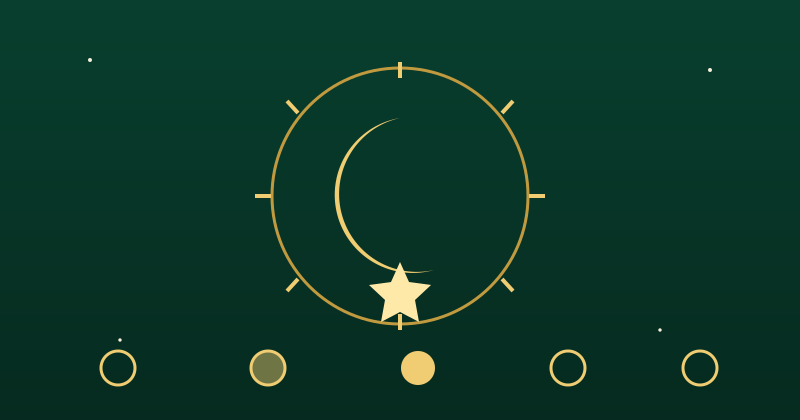
Illustration of a crescent moon inside a circular Hijri calendar ring, with the phases of the moon shown below
A lunar year of 354 days — Ramadan and the Eids travel through every season

Key dates every year

EventHijri dateAbout
Islamic New Year1 MuharramStart of the Hijri year, marking the Prophet's ﷺ migration to Madinah (622 CE).
Day of Ashura10 MuharramThe day Allah saved Musa (AS) and his people; fasting it is recommended (Muslim 1162).
Ramadan begins1 RamadanThe month of fasting, Quran revelation and Taraweeh.
Laylatul QadrLast 10 nights of RamadanThe Night of Decree, better than 1,000 months (Quran 97).
Eid-ul-Fitr1 ShawwalFestival of breaking the fast; Fitrana is given before the Eid prayer.
Hajj — Day of Arafah9 Dhul-HijjahThe central rite of Hajj; fasting it is recommended for non-pilgrims (Muslim 1162).
Eid-ul-Adha10 Dhul-HijjahFestival of Sacrifice, commemorating Ibrahim (AS).

The twelve Islamic months

Muharram, Safar, Rabi' al-Awwal, Rabi' al-Thani, Jumada al-Ula, Jumada al-Akhirah, Rajab, Sha'ban, Ramadan, Shawwal, Dhul-Qa'dah and Dhul-Hijjah. Four are sacred (Quran 9:36): Muharram, Rajab, Dhul-Qa'dah and Dhul-Hijjah. The Hijri year has 354 or 355 days, so Islamic months move through all seasons over a 33-year cycle.

Why does the Islamic calendar have fewer days?

It is a purely lunar calendar of 12 moon-months, each 29 or 30 days — about 11 days shorter than the solar Gregorian year, which is why Ramadan and the Eids rotate through the seasons.

اسلامی کیلنڈر میں دن کم کیوں ہوتے ہیں؟

یہ خالص قمری کیلنڈر ہے جس میں 12 چاند مہینے ہوتے ہیں، ہر مہینہ 29 یا 30 دن کا — یہ شمسی گریگورین سال سے تقریباً 11 دن چھوٹا ہوتا ہے، اسی لیے رمضان اور عیدیں تمام موسموں میں گھومتی ہیں۔

لماذا عدد أيام التقويم الإسلامي أقل؟

لأنه تقويم قمري خالص يتكون من 12 شهرًا قمريًا، كل شهر 29 أو 30 يومًا — أي أقصر بنحو 11 يومًا من السنة الشمسية الميلادية، ولهذا يدور رمضان والأعياد على جميع فصول السنة.

When did the Hijri calendar begin?

Year 1 AH starts from the Hijrah — the Prophet Muhammad's ﷺ migration from Makkah to Madinah in 622 CE. The calendar was formalized under Caliph Umar ibn al-Khattab (RA).

ہجری کیلنڈر کب شروع ہوا؟

سن 1 ہجری ہجرت سے شروع ہوتا ہے — نبی کریم ﷺ کی مکہ سے مدینہ ہجرت (622 عیسوی)۔ اس کیلنڈر کو خلیفہ عمر بن خطاب (رضی اللہ عنہ) کے دور میں باقاعدہ نافذ کیا گیا۔

متى بدأ التقويم الهجري؟

تبدأ السنة الأولى للهجرة من الهجرة النبوية — هجرة النبي محمد ﷺ من مكة إلى المدينة سنة 622 م. وقد اعتُمد التقويم رسميًا في عهد الخليفة عمر بن الخطاب (رضي الله عنه).

Islamic Media

Quran Recitation Audio & Learning Resources

Listen to complete surah recitations by Mishary Rashid Alafasy, streamed free from the Islamic Network CDN, and explore trusted places to keep learning.

Illustration of golden sound waves and a play button rising from an open Quran, showing recitation audio
Listen to the Quran — complete surah recitations, free to stream

Trusted learning resources

Quran.com

The most-used free Quran website — text, translations, tafseer and audio in many languages.

Visit Quran.com →

Sunnah.com

Full searchable text of the major hadith collections in Arabic and English, with references matching DeeniDunya's.

Visit Sunnah.com →

Hisnul Muslim (PDF)

The complete "Fortress of the Muslim" dua book — the source of DeeniDunya's azkar — is available free from islamic publishing houses and apps.

Read azkar online →
A note on nasheeds & videos: DeeniDunya's demo links out only to established educational sources. Any video or nasheed added later will be sourced from official, permission-based channels.
Whose recitation is used for the audio?

Sheikh Mishary Rashid Alafasy, one of the most widely listened-to reciters in the world. Audio is streamed from the Islamic Network's free Quran CDN (the same source behind AlQuran Cloud).

آڈیو میں کس کی تلاوت استعمال ہوتی ہے؟

شیخ مشاری راشد العفاسی، دنیا کے سب سے زیادہ سنے جانے والے قاریوں میں سے ایک۔ آڈیو Islamic Network کے مفت Quran CDN سے چلتی ہے (وہی ماخذ جو AlQuran Cloud کے پیچھے ہے)۔

بصوت من التلاوة المستخدمة في الصوت؟

الشيخ مشاري راشد العفاسي، أحد أكثر القراء استماعًا في العالم. يُبث الصوت من شبكة قرآن Islamic Network المجانية (نفس المصدر وراء AlQuran Cloud).

Can I download the recitations?

The audio files stream in your browser; the Islamic Network CDN also allows direct MP3 access for personal listening. For offline use, the Quran apps of Quran.com and Muslim Pro offer managed downloads.

کیا میں تلاوتیں ڈاؤن لوڈ کر سکتا ہوں؟

آڈیو فائلیں آپ کے براؤزر میں چلتی ہیں؛ Islamic Network CDN ذاتی سماعت کے لیے براہ راست MP3 رسائی بھی دیتا ہے۔ آف لائن استعمال کے لیے Quran.com اور Muslim Pro کی ایپس باقاعدہ ڈاؤن لوڈ فراہم کرتی ہیں۔

هل يمكنني تنزيل التلاوات؟

تُبث الملفات الصوتية في متصفحك؛ كما تتيح شبكة Islamic Network CDN الوصول المباشر إلى MP3 للاستماع الشخصي. وللاستخدام دون اتصال، توفر تطبيقات Quran.com وMuslim Pro تنزيلات مُدارة.

For Our Young Muslims

Kids Corner

A friendly place for children to learn the basics of Islam step by step: how to make wudu, how to pray, short duas for every day, stories of the prophets, and a fun quiz to test what you have learned. Everything here is simple, short and taken from the Quran and authentic Sunnah — parents can check every source.

بچوں کے لیے اسلام کی بنیادی باتیں قدم بہ قدم سیکھنے کی ایک پیاری سی جگہ: وضو کیسے کریں، نماز کیسے پڑھیں، روزمرہ کی چھوٹی دعائیں، انبیاء کی کہانیاں، اور سیکھی ہوئی باتوں کو پرکھنے کے لیے ایک مزے دار کوئز۔ یہاں ہر بات سادہ، مختصر اور قرآن و صحیح سنت سے لی گئی ہے — والدین ہر حوالہ خود دیکھ سکتے ہیں۔

مكان ودود يتعلّم فيه الأطفال أساسيات الإسلام خطوة بخطوة: كيف يتوضؤون، وكيف يصلّون، وأدعية قصيرة لكل يوم، وقصص الأنبياء، واختبار ممتع لقياس ما تعلّموه. كل ما هنا بسيط وقصير ومأخوذ من القرآن والسنة الصحيحة — ويمكن للوالدين التحقق من كل مصدر.

Mosque facade with a patterned prayer mat in front — illustration for: Kids Corner
Learn, pray and play — Islam for our youngest Muslims
First Steps

Learn Wudu — Step by Step

Wudu is the special washing we do before prayer. The Prophet ﷺ taught it exactly like this, and Allah describes its main parts in the Quran (5:6). Say Bismillah, and take your time — every step counts.

1

Say Bismillah

Begin in the name of Allah, and wash your hands three times, rubbing between the fingers.

2

Rinse your mouth

Take water in your right hand, rinse your mouth three times and spit it out.

3

Clean your nose

Sniff a little water into your nose with your right hand, then blow it out with your left — three times.

4

Wash your face

Wash your whole face three times — from the hairline to the chin, and from ear to ear.

5

Wash your arms

Wash your right arm up to and including the elbow three times, then the left arm the same way.

6

Wipe your head

With wet hands, wipe over your head once, from front to back and back again, and wipe your ears.

7

Wash your feet

Wash your right foot up to and including the ankle three times, then the left foot the same way.

8

You are ready!

Your wudu is complete. Now you can pray, read the Quran and make dua with a clean body and a happy heart.

Sources: the parts of wudu are in the Quran (5:6); the order and the three washes follow the wudu of the Prophet ﷺ as described by Uthman (RA) in Sahih al-Bukhari 159.

پہلے قدم

وضو سیکھیں — قدم بہ قدم

وضو وہ خاص دھلائی ہے جو ہم نماز سے پہلے کرتے ہیں۔ نبی کریم ﷺ نے یہ بالکل اسی طرح سکھایا، اور اللہ نے اس کے اہم حصے قرآن میں بیان فرمائے (5:6)۔ بسم اللہ کہیں اور اطمینان سے کریں — ہر قدم اہم ہے۔

1

بسم اللہ کہیں

اللہ کے نام سے شروع کریں اور اپنے ہاتھ تین بار دھوئیں، انگلیوں کے درمیان بھی مل کر۔

2

کلی کریں

دائیں ہاتھ میں پانی لے کر تین بار منہ میں کلی کریں اور پانی تھوک دیں۔

3

ناک صاف کریں

دائیں ہاتھ سے تھوڑا سا پانی ناک میں چڑھائیں، پھر بائیں ہاتھ سے جھاڑ دیں — تین بار۔

4

چہرہ دھوئیں

اپنا پورا چہرہ تین بار دھوئیں — بالوں کی جڑ سے ٹھوڑی تک، اور ایک کان سے دوسرے کان تک۔

5

بازو دھوئیں

دایاں بازو کہنی سمیت تین بار دھوئیں، پھر بایاں بازو بھی اسی طرح۔

6

سر کا مسح کریں

گیلے ہاتھوں سے سر پر ایک بار مسح کریں — آگے سے پیچھے اور پیچھے سے آگے — اور کانوں کا مسح بھی کریں۔

7

پاؤں دھوئیں

دایاں پاؤں ٹخنے سمیت تین بار دھوئیں، پھر بایاں پاؤں بھی اسی طرح۔

8

آپ تیار ہیں!

آپ کا وضو مکمل ہو گیا۔ اب آپ صاف جسم اور خوش دل کے ساتھ نماز پڑھ سکتے ہیں، قرآن پڑھ سکتے ہیں اور دعا مانگ سکتے ہیں۔

حوالے: وضو کے حصے قرآن (5:6) میں ہیں؛ ترتیب اور تین بار دھونا نبی کریم ﷺ کے وضو کے مطابق ہے جو حضرت عثمان رضی اللہ عنہ نے بیان فرمایا — صحیح بخاری 159۔

الخطوات الأولى

تعلّم الوضوء — خطوة بخطوة

الوضوء غسل خاص نفعله قبل الصلاة. وقد علّمه النبي ﷺ هكذا تمامًا، ووصف الله أجزاءه الرئيسة في القرآن (5:6). قل بسم الله، وخذ وقتك — فكل خطوة مهمة.

1

قل بسم الله

ابدأ باسم الله، واغسل يديك ثلاث مرات وخلّل بين الأصابع.

2

تمضمض

خذ الماء بيدك اليمنى وتمضمض ثلاث مرات ثم مجه.

3

نظّف أنفك

استنشق قليلًا من الماء بيدك اليمنى، ثم استنثر بيدك اليسرى — ثلاث مرات.

4

اغسل وجهك

اغسل وجهك كله ثلاث مرات — من منابت الشعر إلى الذقن، ومن الأذن إلى الأذن.

5

اغسل ذراعيك

اغسل ذراعك اليمنى إلى المرفق ثلاث مرات، ثم اليسرى مثلها.

6

امسح رأسك

بيدين مبتلتين امسح رأسك مرة واحدة، من مقدمه إلى مؤخره وارجع، وامسح أذنيك.

7

اغسل قدميك

اغسل قدمك اليمنى إلى الكعب ثلاث مرات، ثم اليسرى مثلها.

8

أنت جاهز!

اكتمل وضوؤك. والآن يمكنك أن تصلي وتقرأ القرآن وتدعو بجسد نظيف وقلب سعيد.

المصادر: أجزاء الوضوء في القرآن (5:6)؛ والترتيب والغسل ثلاثًا على صفة وضوء النبي ﷺ كما وصفها عثمان رضي الله عنه في صحيح البخاري 159.

Talking to Allah

Learn Namaz — How We Pray

Namaz (salah) is how we talk to Allah five times every day. The Prophet ﷺ said: "Pray as you have seen me pray" (Sahih al-Bukhari 631). Here is one rak'ah (one unit of prayer), step by step — every rak'ah follows the same pattern.

1

Stand facing the Qibla

Stand up straight facing the Kaaba, with a quiet intention in your heart to pray for Allah.

2

Allahu Akbar

Raise both hands to your ears and say "Allahu Akbar" — Allah is the Greatest. The prayer has begun.

3

Standing (Qiyam)

Fold your hands, look at the place of prostration, and recite Surah Al-Fatiha, then a short surah or a few verses.

4

Bowing (Ruku)

Say "Allahu Akbar" and bow, with your hands resting on your knees and your back straight. Say three times: "Subhana Rabbiyal Azim" — Glory be to my Lord, the Most Great.

5

Stand up straight

Rise and say: "Sami'Allahu liman hamidah" — Allah hears the one who praises Him — then "Rabbana wa lakal hamd" — Our Lord, to You is all praise.

6

Prostration (Sujood)

Say "Allahu Akbar" and prostrate: forehead and nose, both hands, knees and toes on the ground. Say three times: "Subhana Rabbiyal A'la" — Glory be to my Lord, the Most High.

7

Sit for a moment

Say "Allahu Akbar" and sit calmly for a short while. You can say: "Rabbighfir li" — My Lord, forgive me.

8

Second prostration

Say "Allahu Akbar" and prostrate once more, saying "Subhana Rabbiyal A'la" three times. One full rak'ah is now complete.

9

Sitting for Tashahhud

After the last rak'ah, sit and recite the Tashahhud and the salawat upon the Prophet ﷺ, then make dua.

10

Salam — the prayer ends

Turn your face to the right and say "Assalamu alaikum wa rahmatullah", then to the left the same. Your prayer is complete.

The five daily prayers and their rak'ahs

PrayerFajrDhuhrAsrMaghribIsha
Obligatory rak'ahs24434

Sources: "Pray as you have seen me pray" — Sahih al-Bukhari 631; the words of ruku and sujood — Sahih Muslim 772. Fine details of the prayer are learned best with a parent or teacher, following your family's school of thought.

اللہ سے بات چیت

نماز سیکھیں — ہم نماز کیسے پڑھتے ہیں

نماز وہ طریقہ ہے جس سے ہم ہر روز پانچ بار اللہ سے بات کرتے ہیں۔ نبی کریم ﷺ نے فرمایا: «نماز اس طرح پڑھو جیسے تم نے مجھے پڑھتے دیکھا ہے» (صحیح بخاری 631)۔ یہ ہے ایک رکعت — نماز کی ایک اکائی — قدم بہ قدم؛ ہر رکعت اسی انداز سے ہوتی ہے۔

1

قبلے کی طرف کھڑے ہوں

کعبے کی طرف منہ کر کے سیدھے کھڑے ہوں، اور دل میں اللہ کے لیے نماز کی خاموش نیت کریں۔

2

اللہ اکبر

دونوں ہاتھ کانوں تک اٹھا کر کہیں «اللہ اکبر» — اللہ سب سے بڑا ہے۔ نماز شروع ہو گئی۔

3

قیام

ہاتھ باندھیں، نگاہ سجدے کی جگہ پر رکھیں، اور سورۃ الفاتحہ پڑھیں، پھر کوئی چھوٹی سورت یا چند آیات۔

4

رکوع

«اللہ اکبر» کہہ کر جھکیں، ہاتھ گھٹنوں پر اور کمر سیدھی رکھیں۔ تین بار کہیں: «سُبْحَانَ رَبِّيَ الْعَظِيم» — پاک ہے میرا رب، سب سے عظیم۔

5

سیدھے کھڑے ہوں

اٹھ کر کہیں: «سَمِعَ اللهُ لِمَنْ حَمِدَه» — اللہ اسے سنتا ہے جو اس کی تعریف کرے — پھر «رَبَّنَا وَلَكَ الْحَمْد» — اے ہمارے رب، تمام تعریف تیرے لیے ہے۔

6

سجدہ

«اللہ اکبر» کہہ کر سجدہ کریں: پیشانی اور ناک، دونوں ہاتھ، گھٹنے اور پاؤں کی انگلیاں زمین پر۔ تین بار کہیں: «سُبْحَانَ رَبِّيَ الْأَعْلَىٰ» — پاک ہے میرا رب، سب سے بلند۔

7

تھوڑی دیر بیٹھیں

«اللہ اکبر» کہہ کر تھوڑی دیر آرام سے بیٹھیں۔ آپ کہہ سکتے ہیں: «رَبِّ اغْفِرْ لِي» — میرے رب، مجھے بخش دے۔

8

دوسرا سجدہ

«اللہ اکبر» کہہ کر دوبارہ سجدہ کریں اور تین بار «سُبْحَانَ رَبِّيَ الْأَعْلَىٰ» کہیں۔ اب ایک پوری رکعت مکمل ہو گئی۔

9

تشہد کے لیے بیٹھیں

آخری رکعت کے بعد بیٹھ کر تشہد اور نبی کریم ﷺ پر درود پڑھیں، پھر دعا مانگیں۔

10

سلام — نماز ختم

چہرہ دائیں طرف موڑ کر کہیں «السَّلَامُ عَلَيْكُمْ وَرَحْمَةُ الله» ، پھر بائیں طرف بھی یہی کہیں۔ آپ کی نماز مکمل ہو گئی۔

پانچ روزانہ نمازیں اور ان کی رکعتیں

نمازفجرظہرعصرمغربعشاء
فرض رکعتیں24434

حوالے: «نماز اس طرح پڑھو جیسے تم نے مجھے پڑھتے دیکھا ہے» — صحیح بخاری 631؛ رکوع و سجدے کے کلمات — صحیح مسلم 772۔ نماز کی باریک تفصیلات سب سے بہتر والدین یا استاد کے ساتھ، اپنے خاندان کے مسلک کے مطابق سیکھی جاتی ہیں۔

مناجاة الله

تعلّم الصلاة — كيف نصلّي

الصلاة هي طريقتنا في الكلام مع الله خمس مرات كل يوم. قال النبي ﷺ: «صلّوا كما رأيتموني أصلي» (صحيح البخاري 631). وهذه ركعة واحدة — وحدة من الصلاة — خطوة بخطوة؛ وكل ركعة على هذا النمط نفسه.

1

قف مستقبلًا القبلة

قف مستقيمًا متجهًا إلى الكعبة، بنية هادئة في قلبك أن تصلي لله.

2

الله أكبر

ارفع يديك إلى أذنيك وقل «الله أكبر» — الله أكبر من كل شيء. لقد بدأت الصلاة.

3

القيام

ضع يديك وانظر إلى موضع السجود، واقرأ سورة الفاتحة، ثم سورة قصيرة أو آيات قليلة.

4

الركوع

قل «الله أكبر» واركع، يداك على ركبتيك وظهرك مستوٍ. وقل ثلاث مرات: «سُبْحَانَ رَبِّيَ الْعَظِيم».

5

اعتدل قائمًا

ارفع وقل: «سَمِعَ اللهُ لِمَنْ حَمِدَه» — ثم «رَبَّنَا وَلَكَ الْحَمْد».

6

السجود

قل «الله أكبر» واسجد: الجبهة والأنف واليدان والركبتان وأصابع القدمين على الأرض. وقل ثلاث مرات: «سُبْحَانَ رَبِّيَ الْأَعْلَىٰ».

7

اجلس قليلًا

قل «الله أكبر» واجلس مطمئنًا لحظة قصيرة. ويمكنك أن تقول: «رَبِّ اغْفِرْ لِي».

8

السجدة الثانية

قل «الله أكبر» واسجد مرة أخرى قائلًا «سُبْحَانَ رَبِّيَ الْأَعْلَىٰ» ثلاث مرات. وبذلك تكتمل ركعة كاملة.

9

الجلوس للتشهد

بعد الركعة الأخيرة اجلس واقرأ التشهد والصلاة على النبي ﷺ، ثم ادعُ.

10

السلام — انتهت الصلاة

التفت بوجهك إلى اليمين وقل «السَّلَامُ عَلَيْكُمْ وَرَحْمَةُ الله»، ثم إلى اليسار مثلها. لقد اكتملت صلاتك.

الصلوات الخمس اليومية وعدد ركعاتها

الصلاةالفجرالظهرالعصرالمغربالعشاء
الركعات المفروضة24434

المصادر: «صلّوا كما رأيتموني أصلي» — صحيح البخاري 631؛ وأذكار الركوع والسجود — صحيح مسلم 772. وتفاصيل الصلاة الدقيقة تُتعلَّم أفضل مع أحد الوالدين أو معلم، على مذهب أسرتك.

Words for Every Day

Masnoon Duas for Kids

Eight short duas the Prophet ﷺ taught for moments that happen every single day — from waking up to saying thank you. Each dua shows its source from Hisnul Muslim, so parents can verify it. Tap "I learned it" when you can say a dua from memory — the tracker below remembers your stars on this device.

ہر دن کے کلمات

بچوں کے لیے مسنون دعائیں

آٹھ چھوٹی دعائیں جو نبی کریم ﷺ نے ہر روز پیش آنے والے لمحوں کے لیے سکھائیں — جاگنے سے لے کر شکریہ ادا کرنے تک۔ ہر دعا کے ساتھ حصن المسلم کا حوالہ دیا گیا ہے تاکہ والدین خود تصدیق کر سکیں۔ جب کوئی دعا زبانی یاد ہو جائے تو «میں نے یاد کر لی» دبائیں — نیچے والا ٹریکر اسی ڈیوائس پر آپ کے ستارے یاد رکھتا ہے۔

كلمات لكل يوم

أدعية مأثورة للأطفال

ثمانية أدعية قصيرة علّمها النبي ﷺ للحظات تتكرر كل يوم — من الاستيقاظ إلى قول شكرًا. ويُعرض مع كل دعاء مصدره من حصن المسلم ليتأكد الوالدان بأنفسهما. اضغط «حفظتها» حين تستطيع قول الدعاء غيبًا — والمتتبع أدناه يتذكر نجومك على هذا الجهاز.

Play & Learn

The Kids Quiz

Ten friendly questions about the prophets, the duas and the prayer — every answer is somewhere on this page or elsewhere on DeeniDunya. Answer them all and see your score!

کھیل اور سیکھ

بچوں کا کوئز

انبیاء، دعاؤں اور نماز کے بارے میں دس پیارے سوالات — ہر جواب اسی صفحے پر یا دینی دنیا میں کہیں نہ کہیں موجود ہے۔ سب کے جواب دیں اور اپنا سکور دیکھیں!

العب وتعلّم

اختبار الأطفال

عشرة أسئلة ودودة عن الأنبياء والأدعية والصلاة — وكل إجابة موجودة في مكان ما على هذه الصفحة أو في موقع ديني دنيا. أجب عنها كلها واعرف نتيجتك!

Stories of the Prophets

Prophet Stories to Read Together

Six stories from our Knowledge library, each told from the Quran with its references — wonderful for reading aloud at bedtime.

🌟

Adam (AS)

The first man and the first prophet — and the first lesson in saying sorry to Allah.

Read the story →
🚢

Nuh (AS)

Nine hundred and fifty years of patience, and a great ark built by faith.

Read the story →
🔥

Ibrahim (AS)

The friend of Allah who searched for his Creator and raised the Kaaba's foundations.

Read the story →
🌙

Yusuf (AS)

The best of stories: a dream, a well, a prison — and a heart that forgave.

Read the story →
🌊

Musa (AS)

A baby on the river, a fire on the mountain, and a sea that split in two.

Read the story →
🕊️

Isa (AS)

The Messiah, son of Maryam, who spoke from the cradle and healed by Allah's leave.

Read the story →
انبیاء کی کہانیاں

مل کر پڑھنے کے لیے انبیاء کی کہانیاں

ہماری معلوماتی لائبریری سے چھ کہانیاں، ہر ایک قرآن سے حوالوں کے ساتھ — سوتے وقت سن کر سنانے کے لیے بہترین۔

🌟

آدم علیہ السلام

پہلے انسان اور پہلے نبی — اور اللہ سے معافی مانگنے کا پہلا سبق۔

کہانی پڑھیں ←
🚢

نوح علیہ السلام

ساڑھے نو سو سال کا صبر، اور ایمان کے سہارے بنی ایک عظیم کشتی۔

کہانی پڑھیں ←
🔥

ابراہیم علیہ السلام

اللہ کے خلیل، جنہوں نے اپنے خالق کو تلاش کیا اور کعبے کی بنیادیں اٹھائیں۔

کہانی پڑھیں ←
🌙

یوسف علیہ السلام

بہترین قصہ: ایک خواب، ایک کنواں، ایک قیدخانہ — اور معاف کرنے والا دل۔

کہانی پڑھیں ←
🌊

موسیٰ علیہ السلام

دریا پر ایک بچہ، پہاڑ پر ایک آگ، اور دو حصوں میں پھٹ جانے والا سمندر۔

کہانی پڑھیں ←
🕊️

عیسیٰ علیہ السلام

مسیح، ابن مریم، جو گہوارے سے بولے اور اللہ کے اذن سے شفا دی۔

کہانی پڑھیں ←
قصص الأنبياء

قصص الأنبياء نقرؤها معًا

ست قصص من مكتبة المعرفة عندنا، كل واحدة مروية من القرآن بمراجعها — رائعة للقراءة بصوت عالٍ قبل النوم.

🌟

آدم عليه السلام

أول إنسان وأول نبي — وأول درس في الاعتذار إلى الله.

اقرأ القصة ←
🚢

نوح عليه السلام

تسعمائة وخمسون عامًا من الصبر، وسفينة عظيمة بُنيت بالإيمان.

اقرأ القصة ←
🔥

إبراهيم عليه السلام

خليل الله الذي بحث عن خالقه ورفع قواعد الكعبة.

اقرأ القصة ←
🌙

يوسف عليه السلام

أحسن القصص: رؤيا وجبّ وسجن — وقلب عفا وصفح.

اقرأ القصة ←
🌊

موسى عليه السلام

رضيع على النهر، ونار على الجبل، وبحر انفلق فرقين.

اقرأ القصة ←
🕊️

عيسى عليه السلام

المسيح ابن مريم، الذي تكلّم في المهد وشفى بإذن الله.

اقرأ القصة ←

Questions Parents Ask

Where do the duas on this page come from?

Every dua is from Hisnul Muslim (Fortress of the Muslim), the well-known collection of authentic duas from the Quran and Sunnah, and each card shows its original hadith source — for example, the sleeping dua is in Sahih al-Bukhari 6324. You can explore the full collection on our Duas & Azkar page.

Is the wudu and namaz teaching on this page complete?

It teaches the well-known steps in the order described in the Quran (5:6) and the Prophet's ﷺ own practice (Sahih al-Bukhari 159 and 631). Small details differ between the schools of thought, so treat this page as a friendly first teacher and confirm details with your family's scholar or your child's teacher.

Does the quiz or tracker send my child's data anywhere?

No. The quiz score and the dua tracker live only in this browser on this device (session storage, like DeeniDunya's other trackers). Nothing is uploaded, there are no accounts, and no names are asked for.

والدین کے سوالات

اس صفحے کی دعائیں کہاں سے لی گئی ہیں؟

ہر دعا حصن المسلم سے ہے — قرآن و سنت سے ثابت دعاؤں کا معروف مجموعہ — اور ہر کارڈ پر اس کا اصل حدیثی ماخذ دیا گیا ہے؛ مثلاً سونے کی دعا صحیح بخاری 6324 میں ہے۔ مکمل مجموعہ ہمارے دعائیں و اذکار کے صفحے پر دیکھا جا سکتا ہے۔

کیا اس صفحے پر وضو و نماز کی تعلیم مکمل ہے؟

یہ قرآن (5:6) اور نبی کریم ﷺ کے اپنے عمل (صحیح بخاری 159 اور 631) میں بیان کردہ مشہور مراحل اسی ترتیب سے سکھاتی ہے۔ مسالک کے درمیان چھوٹی تفصیلات میں فرق ہوتا ہے، اس لیے اس صفحے کو ایک پیارا پہلا استاد سمجھیں اور تفصیلات اپنے خاندانی عالم یا بچے کے استاد سے یقینی بنائیں۔

کیا کوئز یا ٹریکر میرے بچے کا ڈیٹا کہیں بھیجتا ہے؟

نہیں۔ کوئز کا سکور اور دعا ٹریکر صرف اسی ڈیوائس کے اسی براؤزر میں رہتا ہے (سیشن سٹوریج، دینی دنیا کے دوسرے ٹریکرز کی طرح)۔ کچھ بھی اپ لوڈ نہیں ہوتا، کوئی اکاؤنٹ نہیں، اور کوئی نام نہیں مانگا جاتا۔

أسئلة يسألها الوالدان

من أين أُخذت أدعية هذه الصفحة؟

كل دعاء مأخوذ من حصن المسلم، المجموع المعروف للأدعية الصحيحة من القرآن والسنة، ويعرض كل بطاقة مصدره الأصلي من الحديث — فدعاء النوم مثلًا في صحيح البخاري 6324. ويمكنكم استكشاف المجموع كاملًا في صفحة الأدعية والأذكار عندنا.

هل تعليم الوضوء والصلاة في هذه الصفحة كامل؟

يعلّم الخطوات المشهورة بالترتيب الموصوف في القرآن (5:6) وفي عمل النبي ﷺ نفسه (صحيح البخاري 159 و631). وتختلف تفاصيل صغيرة بين المذاهب، فاعتبروا هذه الصفحة معلمًا أول ودودًا، وأكّدوا التفاصيل مع عالم أسرتكم أو معلم طفلكم.

هل يرسل الاختبار أو المتتبع بيانات طفلي إلى أي مكان؟

لا. فنتيجة الاختبار ومتتبع الأدعية يبقيان فقط في هذا المتصفح على هذا الجهاز (تخزين الجلسة، كسائر متتبعات ديني دنيا). لا يُرفع أي شيء، ولا توجد حسابات، ولا تُطلب أي أسماء.

Parents: Kids Corner is a learning companion, not a fatwa source. For personal rulings, please consult qualified scholars — and enjoy learning together. Questions or suggestions? Visit our Feedback page.

والدین: بچوں کا گوشہ سیکھنے کا ساتھی ہے، فتوے کا ماخذ نہیں۔ ذاتی شرعی مسائل کے لیے براہ کرم اہلِ علم سے رجوع کریں — اور مل کر سیکھنے کا لطف اٹھائیں۔ سوالات یا تجاویز؟ ہمارا آراء کا صفحہ دیکھیں۔

أيها الوالدان: ركن الأطفال رفيق تعلّم، وليس مصدرًا للفتوى. وللمسائل الشرعية الشخصية يُرجى مراجعة العلماء المؤهلين — واستمتعا بالتعلّم معًا. أسئلة أو اقتراحات؟ زوروا صفحة الآراء عندنا.

Make Up What You Missed

Qaza Tracker

Missed a prayer — because you forgot, overslept, or were travelling? A qaza prayer is a fard prayer prayed later, when you remember it. This tracker helps you count what you owe and make it up one prayer at a time, starting today.

کیا آپ کی کوئی نماز رہ گئی — بھولنے سے، نیند سے، یا سفر میں؟ قضا نماز وہ فرض نماز ہے جو بعد میں پڑھی جائے، جب یاد آئے۔ یہ ٹریکر آپ کو بتاتا ہے کہ آپ پر کتنی نمازیں باقی ہیں، اور انہیں ایک ایک کر کے ادا کرنے میں مدد دیتا ہے — آج سے شروع کریں۔

هل فاتتك صلاة — بسبب النسيان أو النوم أو السفر؟ صلاة القضاء هي الصلاة المفروضة التي تُصلَّى لاحقًا حين تتذكرها. يساعدك هذا المتتبع على عدّ ما عليك وقضائه صلاةً صلاة، بدءًا من اليوم.

Mosque facade with a patterned prayer mat in front — illustration for: Qaza Tracker
Missed prayers, made up one by one — count what you owe, then pray it
The teaching

Pray it when you remember it

The Prophet ﷺ said: "If anyone forgets a prayer he should pray that prayer when he remembers it. There is no expiation except to pray the same." (Sahih al-Bukhari 597; also Sahih Muslim 684.) He then recited Allah's words: "Establish prayer for My remembrance." (Quran 20:14) — and the chapter in Sahih Muslim is titled "Making up a missed prayer, and it is recommended to hasten to make it up".

إِنَّنِىٓ أَنَا ٱللَّهُ لَآ إِلَٰهَ إِلَّآ أَنَا۠ فَٱعْبُدْنِى وَأَقِمِ ٱلصَّلَوٰةَ لِذِكْرِىٓ

"Verily, I — I alone — am God; there is no deity save Me. Hence, worship Me alone, and be constant in prayer, so as to remember Me!" (Quran 20:14, English translation by Muhammad Asad)

The five daily prayers and their fard rak'ahs

PrayerFajrZuhrAsrMaghribIsha
Fard rak'ahs24434

One full day of missed fard prayers is 17 rak'ahs. Only the fard (obligatory) prayers are counted here — the tracker counts rak'ahs, not sunnah or nafl. Scholars differ on details, such as the order in which missed prayers are made up and how to count prayers missed over many years — so treat this page as a counting helper, not a ruling. For your own situation, ask a qualified scholar. New to prayer itself? Start with our step-by-step Salah guide, and check prayer times and the Qibla.

تعلیم

جب یاد آئے تو پڑھ لیں

نبی کریم ﷺ نے فرمایا: «جو شخص کوئی نماز بھول جائے تو اسے چاہیے کہ جب یاد آئے اسے پڑھ لے۔ اس کا کوئی کفارہ نہیں سوائے اسی نماز کے۔» (صحیح بخاری 597؛ صحیح مسلم 684 بھی)۔ پھر آپ ﷺ نے اللہ کا یہ فرمان تلاوت فرمایا: «اور میری یاد کے لیے نماز قائم کرو۔» (قرآن 20:14) — اور صحیح مسلم میں اس باب کا عنوان ہے «چھوٹی ہوئی نماز کی قضا، اور اس میں جلدی کرنا مستحب ہے»۔

إِنَّنِىٓ أَنَا ٱللَّهُ لَآ إِلَٰهَ إِلَّآ أَنَا۠ فَٱعْبُدْنِى وَأَقِمِ ٱلصَّلَوٰةَ لِذِكْرِىٓ

«بےشک میں ہی خدا ہوں۔ میرے سوا کوئی معبود نہیں تو میری عبادت کرو اور میری یاد کے لئے نماز پڑھا کرو» (قرآن 20:14، اردو ترجمہ: فتح محمد جالندھری)

پانچ روزانہ نمازیں اور ان کی فرض رکعتیں

نمازفجرظہرعصرمغربعشاء
فرض رکعتیں24434

ایک پورے دن کی چھوٹی ہوئی فرض نمازیں 17 رکعتیں بنتی ہیں۔ یہاں صرف فرض (واجب) نمازیں گنی جاتی ہیں — ٹریکر رکعتیں گنتا ہے، سنت یا نفل نہیں۔ علماء کے درمیان تفصیلات میں اختلاف ہے — مثلاً قضا نمازیں کس ترتیب سے پڑھی جائیں، اور کئی سالوں کی چھوٹی ہوئی نمازیں کیسے گنی جائیں — اس لیے اس صفحے کو گنتی کا مددگار سمجھیں، فتویٰ نہیں۔ اپنی صورت کے لیے کسی مستند عالم سے رجوع کریں۔ نماز خود نئی سیکھنی ہے؟ ہماری قدم بہ قدم نماز کی رہنمائی سے شروع کریں، اور اوقاتِ نماز و قبلہ دیکھیں۔

التعليم

صلِّها حين تتذكرها

قال النبي ﷺ: «مَنْ نَسِيَ صَلَاةً فَلْيُصَلِّهَا إِذَا ذَكَرَهَا لَا كَفَّارَةَ لَهَا إِلَّا ذَلِكَ» (صحيح البخاري 597؛ وصحيح مسلم 684). ثم تلا قول الله: ﴿وَأَقِمِ الصَّلَاةَ لِذِكْرِي﴾ (القرآن 20:14) — وعنوان الباب في صحيح مسلم: «قَضَاءِ الصَّلَاةِ الْفَائِتَةِ وَاسْتِحْبَابِ تَعْجِيلِ قَضَائِهَا».

إِنَّنِىٓ أَنَا ٱللَّهُ لَآ إِلَٰهَ إِلَّآ أَنَا۠ فَٱعْبُدْنِى وَأَقِمِ ٱلصَّلَوٰةَ لِذِكْرِىٓ

«إِنَّنِي أَنَا اللَّهُ لَا إِلَهَ إِلَّا أَنَا فَاعْبُدْنِي وَأَقِمِ الصَّلَاةَ لِذِكْرِي» (القرآن 20:14)

الصلوات الخمس اليومية وعدد ركعاتها المفروضة

الصلاةالفجرالظهرالعصرالمغربالعشاء
الركعات المفروضة24434

يوم كامل من الصلوات المفروضة الفائتة يساوي 17 ركعة. يُحصى هنا الفرض فقط — يحسب المتتبع الركعات، لا السنن ولا النوافل. ويختلف العلماء في التفاصيل، كترتيب قضاء الصلوات الفائتة وكيفية عدّ صلوات فاتت منذ سنوات — فاعتبر هذه الصفحة أداة للعدّ لا مصدرًا للفتوى. ولحالتك الخاصة اسأل عالمًا مؤهلًا. هل تتعلم الصلاة من جديد؟ ابدأ من دليل الصلاة خطوة بخطوة، وراجع مواقيت الصلاة والقبلة.

Your tracker

Count what you owe

Enter how many days of prayers you missed and the tracker works out the count for each prayer — or adjust any prayer's count directly. Then tap "I prayed one" every time you make up a prayer, and watch the remaining count fall. Your progress is kept in this browser only.

آپ کا ٹریکر

جو باقی ہے وہ گنیں

بتائیں کہ کتنے دنوں کی نمازیں رہ گئی ہیں اور ٹریکر ہر نماز کی گنتی نکال دے گا — یا کسی بھی نماز کی تعداد خود درست کر لیں۔ پھر جب بھی کوئی قضا نماز پڑھیں تو «میں نے ایک پڑھ لی» دبائیں، اور باقی گنتی کم ہوتی دیکھیں۔ آپ کی پیش رفت صرف اسی براؤزر میں محفوظ رہتی ہے۔

متتبعك

احسب ما عليك

أدخل عدد أيام الصلوات التي فاتتك وسيحسب المتتبع عدد كل صلاة — أو عدّل عدد أي صلاة مباشرة. ثم اضغط «صليت واحدة» كلما قضيت صلاة، وشاهد العدد المتبقي ينقص. ويُحفظ تقدمك في هذا المتصفح فقط.

Questions about qaza prayers

What is a qaza prayer?

A qaza prayer is a fard (obligatory) prayer that was missed — forgotten, slept through, or missed while travelling — and is prayed later, when you remember it. The Prophet ﷺ said: "If anyone forgets a prayer he should pray that prayer when he remembers it." (Sahih al-Bukhari 597; also Sahih Muslim 684.)

How many rak'ahs do I owe for one missed day?

One full day of fard prayers is 17 rak'ahs: Fajr 2, Zuhr 4, Asr 4, Maghrib 3 and Isha 4. Enter the number of missed days in the tracker and it works out the count for each prayer — or adjust any prayer's count directly.

Does the tracker send my data anywhere?

No. Your counts live only in this browser on this device (session storage, like DeeniDunya's other trackers). Nothing is uploaded, there are no accounts, and no names are asked for.

قضا نمازوں کے بارے میں سوالات

قضا نماز کیا ہے؟

قضا نماز وہ فرض نماز ہے جو رہ گئی — بھولنے سے، نیند سے، یا سفر میں — اور بعد میں پڑھی جائے جب یاد آئے۔ نبی کریم ﷺ نے فرمایا: «جو شخص کوئی نماز بھول جائے تو اسے چاہیے کہ جب یاد آئے اسے پڑھ لے۔» (صحیح بخاری 597؛ صحیح مسلم 684 بھی)۔

ایک دن کی چھوٹی ہوئی نمازوں کی کتنی رکعتیں بنتی ہیں؟

ایک پورے دن کی فرض نمازیں 17 رکعتیں ہیں: فجر 2، ظہر 4، عصر 4، مغرب 3 اور عشاء 4۔ ٹریکر میں چھوٹے دنوں کی تعداد درج کریں اور یہ ہر نماز کی گنتی نکال دے گا — یا کسی بھی نماز کی تعداد خود درست کر لیں۔

کیا ٹریکر میرا ڈیٹا کہیں بھیجتا ہے؟

نہیں۔ آپ کی گنتی صرف اسی ڈیوائس کے اسی براؤزر میں رہتی ہے (سیشن سٹوریج، دینی دنیا کے دوسرے ٹریکرز کی طرح)۔ کچھ بھی اپ لوڈ نہیں ہوتا، کوئی اکاؤنٹ نہیں، اور کوئی نام نہیں مانگا جاتا۔

أسئلة عن صلاة القضاء

ما هي صلاة القضاء؟

صلاة القضاء هي الصلاة المفروضة التي فاتت — بسبب النسيان أو النوم أو السفر — وتُصلَّى لاحقًا حين تتذكرها. قال النبي ﷺ: «مَنْ نَسِيَ صَلَاةً فَلْيُصَلِّهَا إِذَا ذَكَرَهَا» (صحيح البخاري 597؛ وصحيح مسلم 684).

كم ركعة عليّ عن يوم فائت واحد؟

يوم كامل من الصلوات المفروضة يساوي 17 ركعة: الفجر 2، والظهر 4، والعصر 4، والمغرب 3، والعشاء 4. أدخل عدد الأيام الفائتة في المتتبع وسيحسب عدد كل صلاة — أو عدّل عدد أي صلاة مباشرة.

هل يرسل المتتبع بياناتي إلى أي مكان؟

لا. فأعدادك تبقى فقط في هذا المتصفح على هذا الجهاز (تخزين الجلسة، كسائر متتبعات ديني دنيا). لا يُرفع أي شيء، ولا توجد حسابات، ولا تُطلب أي أسماء.

Qaza Tracker is a counting companion, not a fatwa source. For personal rulings, please consult qualified scholars. Questions or suggestions? Visit our Feedback page.

قضا ٹریکر گنتی کا ساتھی ہے، فتوے کا ماخذ نہیں۔ ذاتی شرعی مسائل کے لیے براہ کرم اہلِ علم سے رجوع کریں۔ سوالات یا تجاویز؟ ہمارا آراء کا صفحہ دیکھیں۔

متتبع القضاء رفيق للعدّ، وليس مصدرًا للفتوى. وللمسائل الشرعية الشخصية يُرجى مراجعة العلماء المؤهلين. أسئلة أو اقتراحات؟ زوروا صفحة الآراء عندنا.

Author Profile

About the Author — M.Usman Saeed

The person behind DeeniDunya (deenidunya.site) — who built it, why, and how to reach him.

M.Usman Saeed

FOUNDER & AUTHOR — DEENIDUNYA.SITE

M.Usman Saeed is the founder and author of DeeniDunya. He builds and runs Islamic and educational websites, and created this platform with one goal: the Quran, authentic Hadith, accurate prayer tools and the daily duas of Hisnul Muslim should be available to everyone in one place — free, on any phone or computer, in English, Urdu and Arabic.

His editorial rule for DeeniDunya is strict: no religious content is published without a checkable source. Every hadith carries its collection and number, every dua its Hisnul Muslim section and original source, and every ayat its surah and ayah number — so any reader can verify anything on this site in seconds.

✉ Contact

Questions, corrections, suggestions for new tools, or a source you think we should check — write to the author directly:

[email protected]

Send an email Leave a review instead

What he maintains on DeeniDunya

  • The Quran reader (114 surahs, EN + UR translation, Alafasy audio)
  • Hadith collection with verified references & the Ayat/Hadith of the Day
  • Prayer times, Qibla compass and the Hijri calendar (Aladhan data)
  • Duas & Azkar from Hisnul Muslim, the 99 Names of Allah
  • Islamic tools: Zakat calculator, Tasbeeh, date converter, trackers
  • Review moderation — every visitor review is approved by him personally

Articles by M.Usman Saeed

All learning articles in the Knowledge section — the Seerah of the Prophet ﷺ, stories of the Prophets, the Sahaba, Islamic history and fiqh basics — are written and maintained by M.Usman Saeed, with Quran and hadith references given inside each article. His articles — the full, growing list — appear below. DeeniDunya presents general knowledge, not fatwas; for personal rulings, please consult a qualified local scholar.

Feedback & Reviews

Your Feedback & Reviews

Tell us what DeeniDunya helps you with — and what we should improve. Your review helps other Muslims discover the site and helps us make it better.

Illustration of emerald and gold tasbeeh prayer beads beside a glowing lantern — artwork for the feedback and reviews page
Your words guide this project — jazakumullah khairan for every review

✍️ Write a review

How approval works: reviews are not published instantly. Each one is first checked by the site owner, M.Usman Saeed, and only appears publicly after approval — the same moderation system used on our sister site ToolAora. This keeps the reviews page respectful, honest and free of spam.

By submitting you agree your name and review may be shown publicly once approved. Please keep reviews respectful and free of personal details.

Approved reviews (13)

What our visitors say about their experience with DeeniDunya.

Awais ChPunjab, Pakistan★★★★★

“Mashallah, Beautiful website with valuable Islamic knowledge. JazakAllah Khair for this wonderful effort!”

Shan Kharal★★★★★

“DeeniDunya is a wonderful and useful platform for anyone looking to strengthen their connection with Islam. It brings everything together in one place, including the Holy Quran, Hadith, daily Duas, Azkar, prayer times, Qibla direction, and helpful Islamic tools. I especially appreciate the availability of Urdu and English translations, which makes the platform accessible to a wider audience. The website is well-organized, easy to navigate, and mobile-friendly. A great initiative to make authentic Islamic knowledge more accessible. May Allah bless the team and reward them for their efforts.”

Ahsan Kharal★★★★★

“Very nice bohat Alla chez hai beautiful good wark”

Zaman Farooq★★★★★

“MashaAllah! The Islamic content is truly informative, inspiring, and beneficial. It provides valuable knowledge about Islam, including Quranic teachings, Hadith, daily duas, and Islamic guidance. This content helps people strengthen their faith, improve their understanding of Islam, and follow the teachings of the Quran and Sunnah in daily life. May Allah bless this beautiful effort and reward everyone involved. Ameen! ❤️”

Hassan★★★★★

“دینی دنیا ایک خوبصورت اور مفید اسلامی ویب سائٹ ہے، جہاں اسلامی معلومات آسان انداز میں ملتی ہیں۔ دین کی معلومات عام کرنے کی ایک بہترین کاوش۔”

Ahmad khan★★★★★

“Great Info”

Farhan Baig★★★★★

“Great Knowledge about Islam”

WK★★★★★

“Deeni Duniya is a useful platform for learning about Islam and gaining Islamic knowledge. The website provides valuable religious information that can help people understand their faith better. I appreciate the effort to spread Islamic teachings and would recommend making the content more user-friendly, well-organized, and accessible to everyone. May Allah bless this effort and make it beneficial for all Muslims.”

Muhammad Usman★★★★★

“Beautiful website with valuable Islamic knowledge. JazakAllah Khair for this wonderful effort! ❤️”

Amina K.★★★★★

“The morning and evening azkar with their references are exactly what I was looking for. The Urdu option makes it easy for my mother to use the site too.”

Bilal R.★★★★★

“Prayer times for my city are accurate and the Qibla compass is simple to follow. I use the Tasbeeh counter every day after Fajr.”

Sarah M.★★★★★

“The Quran reader with English and Urdu side by side helped me understand what I recite. The Zakat calculator is very handy in Ramadan.”

Yusuf A.★★★★★

“Every hadith shows its book and number, so I can verify it myself on sunnah.com. That honesty is exactly why I trust this site.”

Stories of the Prophets

Stories of the Prophets — Isa (AS)

Tasbeeh prayer beads beside a glowing lantern — illustration for: Stories of the Prophets — Isa (AS)
Stories of the Prophets · From the DeeniDunya Knowledge library

Isa (AS) — Jesus, son of Maryam — is one of the greatest messengers of Allah, and the Quran honours him with titles no one else carries: al-Masih (the Messiah), a Word from Allah, and a spirit from Him (Quran 4:171). His story begins with his mother, the purest of women, passes through a birth with no father — by the same power that created Adam with neither father nor mother — and through miracles that pointed, every one of them, not to himself but to the One who sent him. Muslims love and revere Isa (AS) as a mighty prophet and the Messiah — and worship Allah alone, exactly as Isa himself taught.

Maryam, chosen above the women of the worlds

Before Isa's story comes his mother's. The angels said: "O Maryam, indeed Allah has chosen you and purified you and chosen you above the women of the worlds" (Quran 3:42). Maryam (Mary) had devoted herself to worship in the sanctuary under the care of Zakariya (AS), and was miraculously provided with food out of season (Quran 3:37). Then the angels brought her the announcement: "O Maryam, indeed Allah gives you good tidings of a word from Him, whose name is the Messiah, Isa, son of Maryam — distinguished in this world and the Hereafter, and among those brought near to Allah" (Quran 3:45). When she asked, "How will I have a child, when no man has touched me?", the answer came: "Such is Allah; He creates what He wills. When He decrees a matter, He only says to it, 'Be,' and it is" (Quran 3:47). Allah Himself draws the comparison: "Indeed, the example of Isa to Allah is like that of Adam. He created him from dust; then He said to him, 'Be,' and he was" (Quran 3:59).

A miraculous birth and a baby who spoke

Maryam withdrew to a remote place and, beneath a palm tree in the pains of childbirth, was comforted by a call: "Do not grieve; your Lord has provided beneath you a stream. And shake toward you the trunk of the palm tree; it will drop upon you ripe, fresh dates" (Quran 19:24–25). She returned to her people carrying the baby, and they accused her; she simply pointed at the child. From the cradle, Isa spoke: "Indeed, I am the servant of Allah. He has given me the Scripture and made me a prophet. And He has made me blessed wherever I am, and has enjoined upon me prayer and zakah as long as I remain alive, and kindness to my mother — and He has not made me a wretched tyrant. And peace is on me the day I was born, the day I die, and the day I am raised alive" (Quran 19:30–33). His very first words declare who he is: the servant of Allah.

Miracles — all by Allah's permission

Sent to the Children of Israel with the Injil (Gospel) confirming the Tawrah before it (Quran 3:48–50; 5:46), Isa performed miracles that the Quran lists with one repeated condition — by the permission of Allah: "I have come to you with a sign from your Lord: I fashion for you from clay the form of a bird, then I breathe into it, and it becomes a bird by permission of Allah. And I heal the blind and the leper, and I give life to the dead by permission of Allah. And I inform you of what you eat and what you store in your houses" (Quran 3:49). His disciples — the Hawariyyun — believed and said: "Our Lord, we have believed in what You revealed and have followed the messenger, so register us among the witnesses" (Quran 3:52–53). At their request, Allah sent down a table spread from heaven as a provision and a sign (Quran 5:112–115).

Not crucified — raised to Allah

When his enemies plotted to kill him, Allah saved His messenger. The Quran rejects the claim of the crucifixion directly: "And for their saying, 'Indeed, we have killed the Messiah, Isa, son of Maryam, the messenger of Allah.' And they did not kill him, nor did they crucify him; but it was made to appear so to them… Rather, Allah raised him to Himself. And Allah is Almighty, All-Wise" (Quran 4:157–158). Muslims therefore believe Isa (AS) was raised alive to Allah, and that he will return to earth before the Hour — as the Prophet Muhammad ﷺ said: "By the One in Whose Hand is my soul, soon the son of Maryam will descend among you as a just ruler" (Sahih al-Bukhari 2222; Sahih Muslim 155). His return is one of the major signs of the Last Day, and the Quran calls him "knowledge of the Hour" (Quran 43:61).

What Isa's story teaches us

Isa (AS) is among the Ulul Azm, the five messengers of firm resolve (Quran 42:13). His story teaches that Allah's power is not bound by ordinary means — He created Adam with no parents and Isa with no father; that true honour is servanthood to Allah, the title Isa claimed for himself from the cradle; that miracles are signs pointing to Allah, never claims of divinity for the messenger; and that a mother's purity and trust can raise a child through whom the world is guided. The Quran's final word on him and his mother is dignity: "The Messiah, son of Maryam, was not but a messenger; messengers have passed on before him. And his mother was a supporter of truth" (Quran 5:75).

Frequently Asked Questions

What do Muslims believe about Isa (Jesus)?

Muslims believe Isa (AS) is one of the greatest messengers of Allah, the Messiah (al-Masih), born miraculously to Maryam (Mary) without a father (Quran 3:45–47), sent to the Children of Israel with the Injil. He is honoured as a prophet and servant of Allah — and his own first words declare it: "Indeed, I am the servant of Allah" (Quran 19:30).

How was Isa born without a father?

By Allah's command "Be." When Maryam asked how she could have a child untouched by any man, she was told: "Such is Allah; He creates what He wills" (Quran 3:47). The Quran compares his creation to Adam's: "He created him from dust; then He said to him, 'Be,' and he was" (Quran 3:59).

What miracles did Isa perform?

By Allah's permission: he fashioned a bird from clay and it lived, healed the blind and the leper, raised the dead, and told people what they ate and stored at home (Quran 3:49). At his disciples' request, Allah also sent down a table spread from heaven (Quran 5:112–115).

Do Muslims believe Isa was crucified?

No. The Quran says: "They did not kill him, nor did they crucify him; but it was made to appear so to them… Rather, Allah raised him to Himself" (Quran 4:157–158). Muslims believe Allah raised Isa (AS) alive to Himself.

Will Isa return before the Day of Judgment?

Yes — Muslims believe he will descend before the Hour as a just ruler, as the Prophet Muhammad ﷺ described (Sahih al-Bukhari 2222; Sahih Muslim 155). The Quran calls him "knowledge of the Hour" (Quran 43:61), and his return is counted among the major signs of the Last Day.

عیسیٰ علیہ السلام — ابنِ مریم — اللہ کے عظیم ترین رسولوں میں سے ہیں، اور قرآن نے انہیں وہ القاب عطا کیے ہیں جو کسی اور کے پاس نہیں: المسیح، اللہ کی طرف سے ایک کلمہ، اور اس کی طرف سے ایک روح (قرآن 4:171)۔ ان کا قصہ ان کی والدہ سے شروع ہوتا ہے — تمام عورتوں میں سب سے پاکیزہ — ایک ایسی پیدائش سے گزرتا ہے جس میں باپ نہیں، اسی قدرت سے جس نے آدم کو نہ باپ سے پیدا کیا نہ ماں سے، اور ان معجزات سے جن میں سے ہر ایک نے خود ان کی طرف نہیں، بھیجنے والے کی طرف اشارہ کیا۔ مسلمان عیسیٰ علیہ السلام سے ایک عظیم نبی اور مسیح کے طور پر محبت و عقیدت رکھتے ہیں — اور صرف اللہ کی عبادت کرتے ہیں، بالکل ویسے ہی جیسے خود عیسیٰ نے سکھایا۔

مریم — جہانوں کی عورتوں پر چُنی ہوئی

عیسیٰ کے قصے سے پہلے ان کی والدہ کا قصہ ہے۔ فرشتوں نے کہا: «اے مریم! اللہ نے تمہیں چن لیا اور پاکیزہ بنا دیا اور جہانوں کی عورتوں پر تمہیں برگزیدہ کیا» (قرآن 3:42)۔ مریم زکریا علیہ السلام کی نگرانی میں عبادت گاہ میں وقف تھیں، اور انہیں بے موسم رزق معجزانہ طور پر مہیا ہوتا تھا (قرآن 3:37)۔ پھر فرشتے ان کے پاس بشارت لائے: «اے مریم! اللہ تمہیں اپنے ایک کلمے کی خوشخبری دیتا ہے، جس کا نام مسیح عیسیٰ ابن مریم ہے — دنیا و آخرت میں معزز اور مقربین میں سے» (قرآن 3:45)۔ جب انہوں نے پوچھا: «میرے ہاں لڑکا کیسے ہو گا جبکہ مجھے کسی مرد نے چھوا ہی نہیں؟» تو جواب آیا: «اللہ اسی طرح ہے؛ وہ جو چاہتا ہے پیدا کرتا ہے۔ جب وہ کسی کام کا فیصلہ کرتا ہے تو بس کہتا ہے: ہو جا، اور وہ ہو جاتا ہے» (قرآن 3:47)۔ اللہ خود موازنہ بیان فرماتے ہیں: «اللہ کے نزدیک عیسیٰ کی مثال آدم جیسی ہے۔ اس نے اسے مٹی سے بنایا، پھر اس سے کہا: ہو جا، اور وہ ہو گیا» (قرآن 3:59)۔

معجزانہ پیدائش اور گہوارے میں بولنے والا بچہ

مریم ایک دور جگہ جا بیٹھیں اور دردِ زہ میں کھجور کے درخت کے نیچے انہیں تسلی کی آواز آئی: «غم نہ کرو؛ تمہارے رب نے نیچے ایک چشمہ جاری کر دیا ہے۔ اور کھجور کے تنے کو اپنی طرف ہلاؤ، تم پر تازہ پکی کھجوریں گریں گی» (قرآن 19:24–25)۔ وہ بچے کو اٹھائے قوم کے پاس واپس آئیں تو لوگوں نے الزام لگایا؛ انہوں نے بس بچے کی طرف اشارہ کر دیا۔ گہوارے ہی سے عیسیٰ بولے: «میں اللہ کا بندہ ہوں۔ اس نے مجھے کتاب دی اور مجھے نبی بنایا۔ اور اس نے مجھے بابرکت بنایا جہاں بھی میں رہوں، اور جب تک زندہ رہوں مجھے نماز اور زکوٰۃ کی وصیت کی، اور اپنی والدہ سے حسنِ سلوک کی — اور مجھے سرکش و بدبخت نہیں بنایا۔ اور مجھ پر سلامتی ہے جس دن میں پیدا ہوا، جس دن مروں گا اور جس دن زندہ اٹھایا جاؤں گا» (قرآن 19:30–33)۔ ان کے سب سے پہلے کلمات یہ بتاتے ہیں کہ وہ کون ہیں: اللہ کے بندے۔

معجزات — سب اللہ کے اذن سے

بنی اسرائیل کی طرف انجیل کے ساتھ بھیجے گئے، جو اپنے سے پہلے نازل شدہ تورات کی تصدیق کرتی تھی (قرآن 3:48–50؛ 5:46)، عیسیٰ نے وہ معجزات دکھائے جنہیں قرآن ایک دہرائی ہوئی شرط کے ساتھ گنتا ہے — اللہ کے اذن سے: «میں تمہارے پاس تمہارے رب کی طرف سے نشانی لے کر آیا ہوں: میں تمہارے لیے مٹی سے پرندے کی شکل بناتا ہوں، پھر اس میں پھونکتا ہوں تو وہ اللہ کے اذن سے پرندہ بن جاتا ہے۔ اور میں اندھے اور کوڑھی کو اچھا کرتا ہوں، اور اللہ کے اذن سے مردوں کو زندہ کرتا ہوں۔ اور میں تمہیں بتاتا ہوں جو تم کھاتے ہو اور جو اپنے گھروں میں ذخیرہ کرتے ہو» (قرآن 3:49)۔ ان کے حواری ایمان لائے اور کہا: «ہمارے رب! ہم ایمان لائے اس پر جو تو نے نازل کیا اور ہم نے رسول کی پیروی کی، پس ہمیں گواہی دینے والوں میں لکھ لے» (قرآن 3:52–53)۔ ان کی درخواست پر اللہ نے آسمان سے دسترخوان بھی نازل فرمایا — رزق اور نشانی کے طور پر (قرآن 5:112–115)۔

سولی نہیں چڑھے — اللہ کی طرف اٹھائے گئے

جب ان کے دشمنوں نے انہیں قتل کرنے کی سازش کی تو اللہ نے اپنے رسول کو بچا لیا۔ قرآن سولی کے دعوے کو براہِ راست رد کرتا ہے: «اور ان کے اس کہنے کی وجہ سے: ہم نے مسیح عیسیٰ ابن مریم، اللہ کے رسول کو قتل کر دیا۔ حالانکہ انہوں نے نہ اسے قتل کیا اور نہ سولی چڑھایا، بلکہ ان کے لیے مشتبہ بنا دیا گیا… بلکہ اللہ نے اسے اپنی طرف اٹھا لیا۔ اور اللہ زبردست، حکمت والا ہے» (قرآن 4:157–158)۔ اس لیے مسلمان مانتے ہیں کہ عیسیٰ علیہ السلام زندہ اللہ کی طرف اٹھائے گئے، اور وہ قیامت سے پہلے زمین پر واپس آئیں گے — جیسا کہ نبی کریم ﷺ نے فرمایا: «اس ذات کی قسم جس کے ہاتھ میں میری جان ہے، عنقریب ابن مریم تم میں عادل حاکم بن کر اتریں گے» (صحیح بخاری 2222؛ صحیح مسلم 155)۔ ان کی واپسی قیامت کی بڑی نشانیوں میں سے ہے، اور قرآن انہیں «قیامت کی ایک نشانی» (علم للساعة) کہتا ہے (قرآن 43:61)۔

عیسیٰ کے قصے سے ہمیں کیا سبق ملتا ہے؟

عیسیٰ علیہ السلام اولو العزم — پانچ پختہ عزم والے رسولوں — میں سے ہیں (قرآن 42:13)۔ ان کا قصہ سکھاتا ہے کہ اللہ کی قدرت عام اسباب کی پابند نہیں — اس نے آدم کو بغیر والدین کے اور عیسیٰ کو بغیر باپ کے پیدا کیا؛ کہ اصل عزت اللہ کی بندگی ہے، وہی لقب جو عیسیٰ نے گہوارے سے اپنے لیے پسند کیا؛ کہ معجزات اللہ کی طرف اشارہ کرنے والی نشانیاں ہیں، رسول کے لیے خدائی کا دعویٰ کبھی نہیں؛ اور یہ کہ ایک ماں کی پاکیزگی اور بھروسا ایک ایسے بچے کی تربیت کر سکتی ہے جس سے دنیا کو ہدایت ملے۔ ان پر اور ان کی والدہ پر قرآن کا آخری کلمہ عزت کا ہے: «مسیح ابن مریم ایک رسول ہی تھے؛ ان سے پہلے کئی رسول گزر چکے۔ اور ان کی والدہ سچی تھیں» (قرآن 5:75)۔

اکثر پوچھے جانے والے سوالات

مسلمان عیسیٰ (علیہ السلام) کے بارے میں کیا مانتے ہیں؟

مسلمان مانتے ہیں کہ عیسیٰ علیہ السلام اللہ کے عظیم ترین رسولوں میں سے ہیں، المسیح ہیں، مریم کے ہاں بغیر باپ کے معجزانہ طور پر پیدا ہوئے (قرآن 3:45–47) اور بنی اسرائیل کی طرف انجیل دے کر بھیجے گئے۔ وہ ایک نبی اور اللہ کے بندے کے طور پر قابلِ احترام ہیں — اور ان کے پہلے کلمات خود یہی اعلان کرتے ہیں: «میں اللہ کا بندہ ہوں» (قرآن 19:30)۔

عیسیٰ بغیر باپ کے کیسے پیدا ہوئے؟

اللہ کے حکم «کُن» سے۔ جب مریم نے پوچھا کہ ان کے ہاں بچہ کیسے ہو گا جبکہ کسی مرد نے انہیں چھوا نہیں، تو جواب ملا: «اللہ اسی طرح ہے؛ وہ جو چاہتا ہے پیدا کرتا ہے» (قرآن 3:47)۔ قرآن ان کی تخلیق کا موازنہ آدم سے کرتا ہے: «اس نے اسے مٹی سے بنایا، پھر اس سے کہا: ہو جا، اور وہ ہو گیا» (قرآن 3:59)۔

عیسیٰ نے کون سے معجزات دکھائے؟

اللہ کے اذن سے: مٹی سے پرندے کی شکل بنا کر اسے زندہ کیا، اندھے اور کوڑھی کو اچھا کیا، مردوں کو زندہ کیا، اور لوگوں کو بتایا کہ وہ کیا کھاتے اور گھروں میں کیا ذخیرہ کرتے ہیں (قرآن 3:49)۔ حواریوں کی درخواست پر اللہ نے آسمان سے دسترخوان بھی نازل فرمایا (قرآن 5:112–115)۔

کیا مسلمان مانتے ہیں کہ عیسیٰ کو سولی چڑھایا گیا تھا؟

نہیں۔ قرآن کہتا ہے: «انہوں نے نہ اسے قتل کیا اور نہ سولی چڑھایا، بلکہ ان کے لیے مشتبہ بنا دیا گیا… بلکہ اللہ نے اسے اپنی طرف اٹھا لیا» (قرآن 4:157–158)۔ مسلمان مانتے ہیں کہ اللہ نے عیسیٰ علیہ السلام کو زندہ اپنی طرف اٹھا لیا۔

کیا عیسیٰ قیامت سے پہلے واپس آئیں گے؟

جی ہاں — مسلمان مانتے ہیں کہ وہ قیامت سے پہلے عادل حاکم بن کر اتریں گے، جیسا کہ نبی کریم ﷺ نے بیان فرمایا (صحیح بخاری 2222؛ صحیح مسلم 155)۔ قرآن انہیں «قیامت کی نشانی» کہتا ہے (قرآن 43:61)، اور ان کی واپسی قیامت کی بڑی نشانیوں میں شمار ہوتی ہے۔

عيسى عليه السلام — ابن مريم — من أعظم رسل الله، وقد شرّفه القرآن بألقاب لا يحملها غيره: المسيح، وكلمة من الله، وروح منه (القرآن 4:171). وتبدأ قصته بأمه، أطهر النساء، وتمر بولادة بلا أب — بالقدرة نفسها التي خلقت آدم بلا أب ولا أم — وبمعجزات دلّت كل واحدة منها، لا على نفسه، بل على من أرسله. يحب المسلمون عيسى عليه السلام ويجلّونه نبيًا عظيمًا ومسيحًا — ويعبدون الله وحده، كما علّم عيسى نفسه تمامًا.

مريم، المصطفاة على نساء العالمين

قبل قصة عيسى تأتي قصة أمه. قالت الملائكة: «يَا مَرْيَمُ إِنَّ اللَّهَ اصْطَفَاكِ وَطَهَّرَكِ وَاصْطَفَاكِ عَلَىٰ نِسَاءِ الْعَالَمِينَ» (القرآن 3:42). وكانت مريم قد نذرت نفسها للعبادة في المحراب تحت كفالة زكريا عليه السلام، وكانت تُرزق طعامًا في غير موسمه معجزة (القرآن 3:37). ثم جاءتها الملائكة بالبشرى: «يَا مَرْيَمُ إِنَّ اللَّهَ يُبَشِّرُكِ بِكَلِمَةٍ مِّنْهُ اسْمُهُ الْمَسِيحُ عِيسَى ابْنُ مَرْيَمَ وَجِيهًا فِي الدُّنْيَا وَالْآخِرَةِ وَمِنَ الْمُقَرَّبِينَ» (القرآن 3:45). فلما سألت: «أَنَّىٰ يَكُونُ لِي وَلَدٌ وَلَمْ يَمْسَسْنِي بَشَرٌ؟» جاء الجواب: «كَذَٰلِكِ اللَّهُ يَخْلُقُ مَا يَشَاءُ ۚ إِذَا قَضَىٰ أَمْرًا فَإِنَّمَا يَقُولُ لَهُ كُن فَيَكُونُ» (القرآن 3:47). والله نفسه يضرب المثل: «إِنَّ مَثَلَ عِيسَىٰ عِندَ اللَّهِ كَمَثَلِ آدَمَ ۖ خَلَقَهُ مِن تُرَابٍ ثُمَّ قَالَ لَهُ كُن فَيَكُونُ» (القرآن 3:59).

ولادة معجزة ورضيع تكلّم

اعتزلت مريم مكانًا قصيًا، وتحت جذع نخلة في آلام المخاض جاءها النداء مواسيًا: «أَلَّا تَحْزَنِي قَدْ جَعَلَ رَبُّكِ تَحْتَكِ سَرِيًّا * وَهُزِّي إِلَيْكِ بِجِذْعِ النَّخْلَةِ تُسَاقِطْ عَلَيْكِ رُطَبًا جَنِيًّا» (القرآن 19:24–25). فعادت إلى قومها تحمله، فاتهموها؛ فأشارت إلى الصبي. فتكلّم عيسى في المهد: «إِنِّي عَبْدُ اللَّهِ آتَانِيَ الْكِتَابَ وَجَعَلَنِي نَبِيًّا * وَجَعَلَنِي مُبَارَكًا أَيْنَ مَا كُنتُ وَأَوْصَانِي بِالصَّلَاةِ وَالزَّكَاةِ مَا دُمْتُ حَيًّا * وَبَرًّا بِوَالِدَتِي وَلَمْ يَجْعَلْنِي جَبَّارًا شَقِيًّا * وَالسَّلَامُ عَلَيَّ يَوْمَ وُلِدتُّ وَيَوْمَ أَمُوتُ وَيَوْمَ أُبْعَثُ حَيًّا» (القرآن 19:30–33). فأول كلماته تعلن من هو: عبد الله.

المعجزات — كلها بإذن الله

أُرسل إلى بني إسرائيل بالإنجيل مصدقًا لما بين يديه من التوراة (القرآن 3:48–50؛ 5:46)، وأجرى الله على يديه معجزات يعددها القرآن بشرط واحد يتكرر — بإذن الله: «قَدْ جِئْتُكُم بِآيَةٍ مِّن رَّبِّكُمْ ۖ أَنِّي أَخْلُقُ لَكُم مِّنَ الطِّينِ كَهَيْئَةِ الطَّيْرِ فَأَنفُخُ فِيهِ فَيَكُونُ طَيْرًا بِإِذْنِ اللَّهِ ۖ وَأُبْرِئُ الْأَكْمَهَ وَالْأَبْرَصَ وَأُحْيِي الْمَوْتَىٰ بِإِذْنِ اللَّهِ ۖ وَأُنَبِّئُكُم بِمَا تَأْكُلُونَ وَمَا تَدَّخِرُونَ فِي بُيُوتِكُمْ» (القرآن 3:49). وآمن حواريوه وقالوا: «رَبَّنَا آمَنَّا بِمَا أَنزَلْتَ وَاتَّبَعْنَا الرَّسُولَ فَاكْتُبْنَا مَعَ الشَّاهِدِينَ» (القرآن 3:52–53). وبطلبهم أنزل الله مائدة من السماء رزقًا وآية (القرآن 5:112–115).

لم يُصلب — بل رفعه الله إليه

فلما مكر أعداؤه لقتله، نجّى الله رسوله. ويرفض القرآن دعوى الصلب صراحة: «وَقَوْلِهِمْ إِنَّا قَتَلْنَا الْمَسِيحَ عِيسَى ابْنَ مَرْيَمَ رَسُولَ اللَّهِ وَمَا قَتَلُوهُ وَمَا صَلَبُوهُ وَلَٰكِن شُبِّهَ لَهُمْ… بَل رَّفَعَهُ اللَّهُ إِلَيْهِ ۚ وَكَانَ اللَّهُ عَزِيزًا حَكِيمًا» (القرآن 4:157–158). ولذلك يؤمن المسلمون أن عيسى عليه السلام رُفع حيًا إلى الله، وأنه سينزل إلى الأرض قبل الساعة — كما قال النبي محمد ﷺ: «وَالَّذِي نَفْسِي بِيَدِهِ، لَيُوشِكَنَّ أَنْ يَنْزِلَ فِيكُمُ ابْنُ مَرْيَمَ حَكَمًا عَدْلًا» (صحيح البخاري 2222؛ صحيح مسلم 155). ونزوله من أشراط الساعة الكبرى، وسمّاه القرآن «عِلْمٌ لِّلسَّاعَةِ» (القرآن 43:61).

ماذا تعلّمنا قصة عيسى؟

عيسى عليه السلام من أولي العزم الخمسة من الرسل (القرآن 42:13). وتعلّمنا قصته أن قدرة الله لا تحكمها الأسباب العادية — فقد خلق آدم بلا أبوين وعيسى بلا أب؛ وأن الشرف الحقيقي في العبودية لله، وهو اللقب الذي ادعاه عيسى لنفسه من المهد؛ وأن المعجزات آيات تدل على الله، لا دعاوى ألوهية للرسل أبدًا؛ وأن طهر أم وثقتها بالله قد يربيان طفلًا تُهدى به الدنيا. وآخر كلام القرآن عنه وعن أمه كلام تكريم: «مَّا الْمَسِيحُ ابْنُ مَرْيَمَ إِلَّا رَسُولٌ قَدْ خَلَتْ مِن قَبْلِهِ الرُّسُلُ وَأُمُّهُ صِدِّيقَةٌ» (القرآن 5:75).

الأسئلة الشائعة

ما الذي يؤمن به المسلمون عن عيسى عليه السلام؟

يؤمن المسلمون أن عيسى عليه السلام من أعظم رسل الله، وهو المسيح، وُلد من مريم بلا أب معجزة (القرآن 3:45–47)، وأُرسل إلى بني إسرائيل بالإنجيل. وهو مُكرَّم نبيًا وعبدًا لله — وأول كلماته نفسها تعلن ذلك: «إِنِّي عَبْدُ اللَّهِ» (القرآن 19:30).

كيف وُلد عيسى بلا أب؟

بأمر الله «كن». فلما سألت مريم كيف يكون لها ولد ولم يمسسها بشر، قيل لها: «كَذَٰلِكِ اللَّهُ يَخْلُقُ مَا يَشَاءُ» (القرآن 3:47). ويقارن القرآن خلقه بخلق آدم: «خَلَقَهُ مِن تُرَابٍ ثُمَّ قَالَ لَهُ كُن فَيَكُونُ» (القرآن 3:59).

ما معجزات عيسى عليه السلام؟

بإذن الله: خلق من الطين هيئة طير فصار طيرًا حيًا، وأبرأ الأكمه والأبرص، وأحيا الموتى، وأنبأ الناس بما يأكلون وما يدخرون في بيوتهم (القرآن 3:49). وبطلب حوارييه أنزل الله مائدة من السماء أيضًا (القرآن 5:112–115).

هل يؤمن المسلمون أن عيسى صُلب؟

لا. يقول القرآن: «وَمَا قَتَلُوهُ وَمَا صَلَبُوهُ وَلَٰكِن شُبِّهَ لَهُمْ… بَل رَّفَعَهُ اللَّهُ إِلَيْهِ» (القرآن 4:157–158). ويؤمن المسلمون أن الله رفع عيسى عليه السلام حيًا إليه.

هل سيعود عيسى قبل يوم القيامة؟

نعم — يؤمن المسلمون أنه سينزل قبل الساعة حكمًا عدلًا، كما وصف النبي محمد ﷺ (صحيح البخاري 2222؛ صحيح مسلم 155). وسمّاه القرآن «عِلْمٌ لِّلسَّاعَةِ» (القرآن 43:61)، ونزوله من أشراط الساعة الكبرى.

More from the Knowledge library